
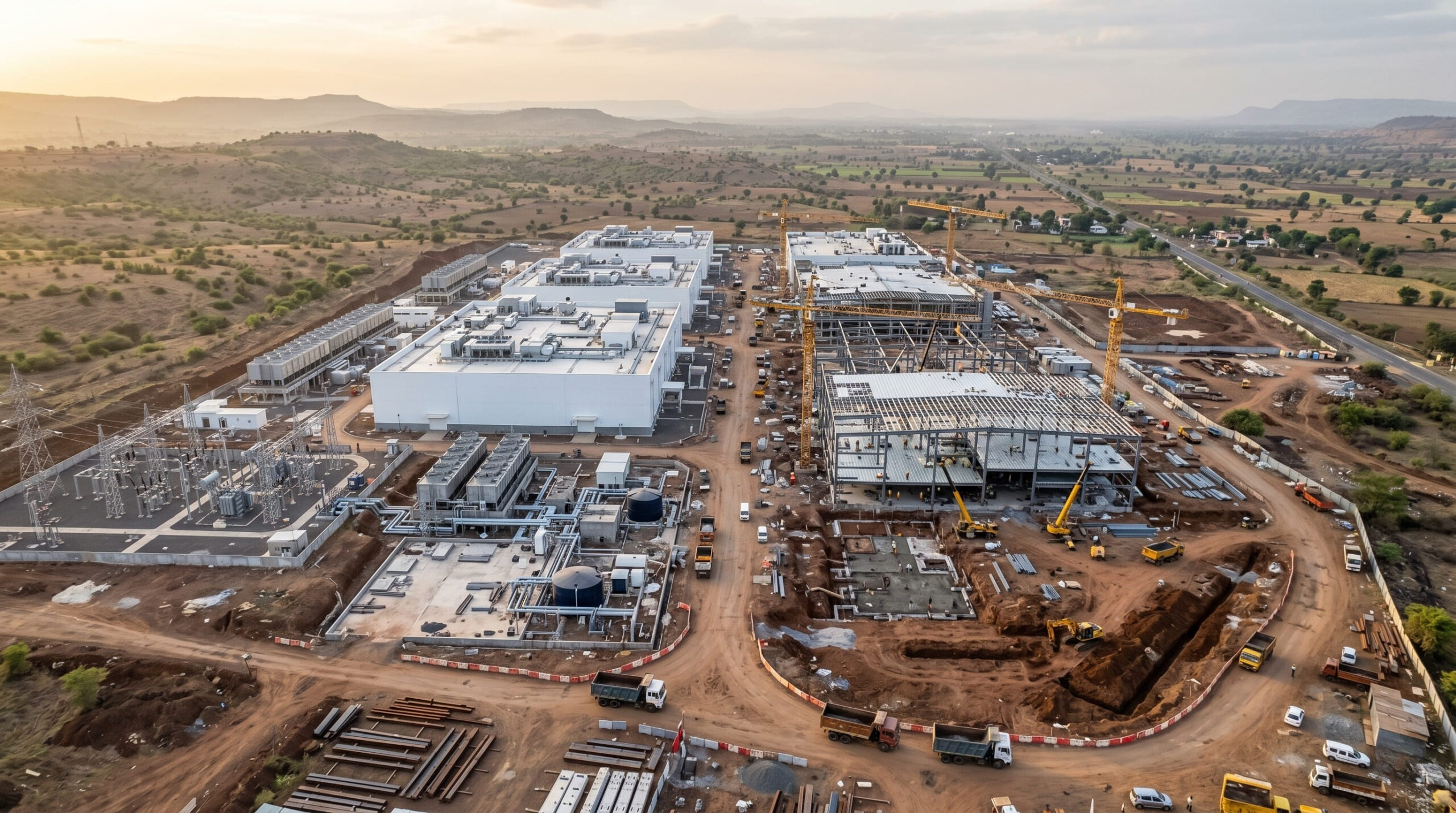
Raigad data center Maharashtra is the phrase every CIO in the Mumbai Metropolitan Region should be searching right now. On June 1, 2026, the Maharashtra government signed a Letter of Intent with AirTrunk, the Blackstone-backed Australian hyperscale operator, for a 3 GW data center campus at the Raigad Pen Growth Centre in Pen Taluka. The investment figure: approximately Rs. 2 lakh crore, which is around $21 billion.
Four days later, AirTrunk announced its full India commitment of $30 billion by 2030. Prime Minister Narendra Modi personally acknowledged the investment on X. Maharashtra Chief Minister Devendra Fadnavis confirmed the land allotment LoI at Raigad. This is not a rumour or a plan on paper. It is moving.
But here is what nobody is writing about yet. Every new hyperscale campus that gets built creates a wave of physical migration demand. Servers do not relocate themselves. Enterprises across Navi Mumbai, Mumbai, Thane, and Pune that plan to co-locate into this campus will need experienced hands on the ground to execute the move. That window is opening right now, and the companies that plan early will have a significant advantage over those that wait.
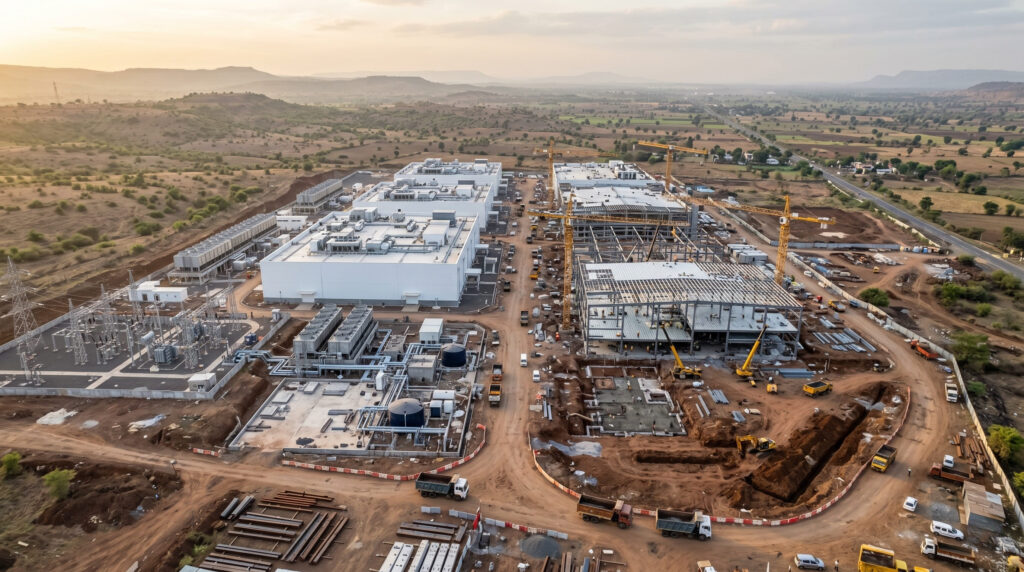
Table of Contents
- Raigad Data Center Maharashtra: What Happened on June 1, 2026
- The Raigad Pen Growth Centre: Location, Scale, and Why It Matters
- The Bigger Picture: India’s Data Center Boom in Numbers
- The Migration Wave Nobody Is Talking About
- What a Physical Data Center Migration Actually Involves
- What Enterprises Near Mumbai Must Do Right Now
- How One World Logix Helps You Move Into the New Era
1. Raigad Data Center Maharashtra: What Happened on June 1, 2026
The story starts with AirTrunk entering India in April 2026 by acquiring Lumina CloudInfra. That acquisition gave the company an immediate development pipeline of 600 MW spread across Mumbai, Chennai, and Hyderabad.
Then on June 1, 2026, AirTrunk signed a Letter of Intent for land allotment at the Raigad Pen Growth Centre in Maharashtra. The proposed campus targets 3 GW of capacity, making it one of the largest single data center project announcements anywhere in the world. The estimated investment is $21.05 billion.
AirTrunk was founded by Robin Khuda and is backed by Blackstone and CPPIB, the Canada Pension Plan Investment Board, which acquired the company in 2024 for AU$24 billion in what was the largest data center transaction globally at that time. This is not a startup bet. This is institutional money at the highest level, coming to Maharashtra.
2. The Raigad Pen Growth Centre: Location, Scale, and Why It Matters
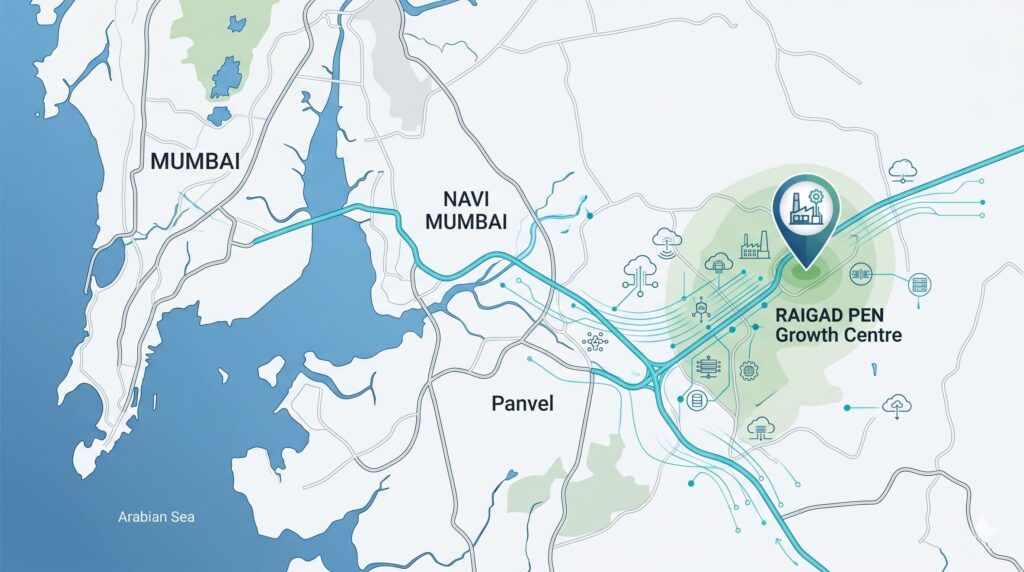
The Raigad Pen Growth Centre sits in Pen Taluka, Raigad District, covering 1,217 acres across 5 clusters and 16 villages. According to MMRDA, the site is 25 km from Panvel and 15 to 20 km from the Navi Mumbai International Airport, which was inaugurated on December 25, 2025.
This is the “Third Mumbai” zone. Maharashtra CM Devendra Fadnavis announced the Raigad-Pen Growth Centre as the first city of the Third Mumbai vision, modelled on Bandra Kurla Complex. MMRDA signed a shareholder agreement for the project on April 18, 2026. The state’s 2026-27 budget has allocated Rs. 500 crore specifically for the Pen Growth Centre infrastructure.
For any enterprise looking at colocation in the Mumbai Metropolitan Region, this location is not remote. It is 30 km from OWL’s own office in CBD Belapur, Navi Mumbai. It sits on the Mumbai-Pune growth corridor with port access, rail connectivity via Hamrapur and Pen stations, and road access to the upcoming Navi Mumbai airport.
3. The Bigger Picture: India’s Data Center Boom in Numbers
The Raigad project does not stand alone. It is the largest single piece of a national boom that has been accelerating through 2025 and 2026.
India’s data center market was valued at $10.8 billion in 2026 and is projected to reach $36.6 billion by 2035, according to Dimension Market Research. Between March 2025 and April 2026, Indian operators announced roughly 30 large data center projects adding approximately 3.5 GW of planned capacity across the country, according to CRNASIA. India’s total existing capacity today is around 1.5 GW. AirTrunk alone is proposing to add double that at a single campus.
The investments are stacking up fast. Meta announced its first India AI data center on June 10, 2026, partnering with Reliance Industries for a 168 MW facility in Jamnagar, Gujarat. Google has a $15 billion AI campus planned in Visakhapatnam through AdaniConneX. Yotta is deploying $2 billion with Nvidia Blackwell Ultra chips across its Greater Noida and Navi Mumbai campuses. AI-related colocation leasing more than doubled to 348 MW in the past year, now accounting for nearly 20 percent of total demand, per CRNASIA.
Maharashtra alone leads with over 85 data centers concentrated in Mumbai and Navi Mumbai, accounting for around 52 percent of India’s total data center capacity.
4. The Migration Wave Nobody Is Talking About
Every data center that opens is a destination. And every destination needs a migration.
When an enterprise CIO decides to move from an aging 15-year-old server room into a modern colocation facility, every server, storage unit, switch, and network device needs to be physically decommissioned at the source, transported safely, installed at the new facility, cabled, tested, and brought online. That is not a cloud task. That is a physical logistics and engineering task.
The 30 large projects announced since March 2025 represent hundreds of enterprise clients who will make exactly this move in the coming months and years. Each enterprise signing a colocation lease needs a migration partner on the ground. Most of them have never done it before at scale.
This is the part of India’s data center boom that no technology publication is covering. The hardware does not move by itself. And the cost of getting it wrong, a server damaged in transit, a misconfigured rack, an extended outage during cutover, can run into crores for a bank, telecom, or pharma company in a single day.
5. What a Physical Data Center Migration Actually Involves
A physical data center migration is more structured than most IT managers expect until they are in the middle of one.
It begins with a full asset audit. Every server, switch, UPS, storage array, PDU, cable tray, and peripheral is documented before anything is touched. This inventory becomes the migration bible. Without it, things get lost, misconfigured, or reinstalled in the wrong sequence.
Next comes the decommissioning plan: which systems move first, which stay live until the last phase, and how to maintain business continuity throughout. For companies with uptime SLAs, this sequencing is critical. A poorly planned cutover can cause hours or days of downtime that cost far more than the migration itself.
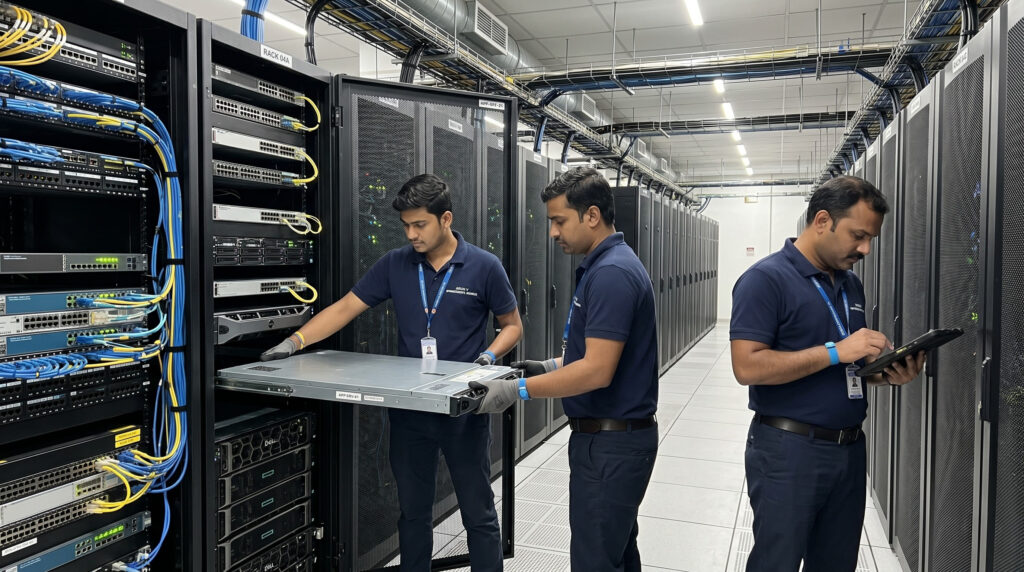
Transport requires vibration-dampened vehicles, anti-static packaging for sensitive storage arrays, and temperature control for certain hardware. At the destination, every unit must be racked in a specific order, cabled correctly, and powered on in a sequence that avoids circuit overload. Post-migration validation and smoke testing can take 24 to 72 hours depending on the size of the environment.
For enterprises moving into a campus like Raigad, this is not a weekend project managed by the internal IT team. It requires experienced field engineers who have done this dozens of times, with the right equipment and a zero-downtime methodology already built.
6. What Enterprises Near Mumbai Must Do Right Now
The Raigad campus will not be operational overnight. Hyperscale builds of this scale typically reach first operational phases in 2 to 4 years from land allotment. But enterprise migration planning cannot wait until the building is ready.
Colocation providers lease space 12 to 18 months before a new facility goes live. Enterprises that want preferred rack positions, better pricing, and enough migration time to do the job properly need to be in conversations with providers today.
Start with a site assessment of your current facility. Understand exactly what you have, the age of your hardware, what can be migrated versus what must be replaced, and what the real cost of a move will look like. A qualified migration specialist can do this in a single site visit, at no cost, before you commit to any lease or contract.
The enterprises that move early will get the best rates, the most migration time, and the lowest risk. The ones that wait will face rushed moves, compressed timelines, and higher exposure to downtime.
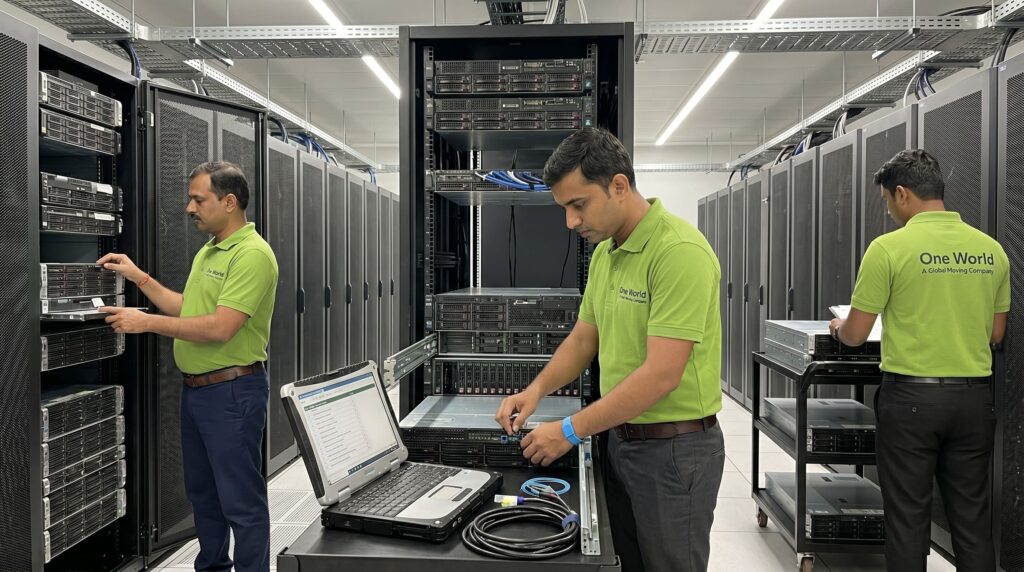
7. How One World Logix Helps You Move Into the New Era
One World Logix (OWL), headquartered in CBD Belapur, Navi Mumbai, is located minutes from the Raigad corridor. With 14 years of experience and projects executed across 30 countries, OWL is India’s Zero-Downtime Migration Specialists for physical data center moves, server relocation, and IT infrastructure migration.
OWL holds ISO 9001:2015 certification and is an active member of IAM and GEM, the international standards bodies for migration. Every migration OWL executes is backed by a structured methodology: full asset audit, phased decommissioning, vibration-safe transport, and validated recommissioning at the destination.
As Maharashtra’s data center footprint grows from Navi Mumbai into the Raigad belt, OWL’s local presence, engineering capability, and cross-border freight experience make it the natural migration partner for enterprises planning their move into India’s next generation of digital infrastructure.
If your organisation is planning to move into a new colocation facility, consolidate multiple server rooms, or simply wants to understand what a migration would cost and involve, start with a free on-site assessment. No commitment. No cost. Just clarity.
Contact One World Logix today:
Phone: +91-882-882-0887
Email: info@oneworldlogix.com
Website: oneworldlogix.com
Book your free data center site assessment before the Raigad era begins. Be the enterprise that is already ready.