
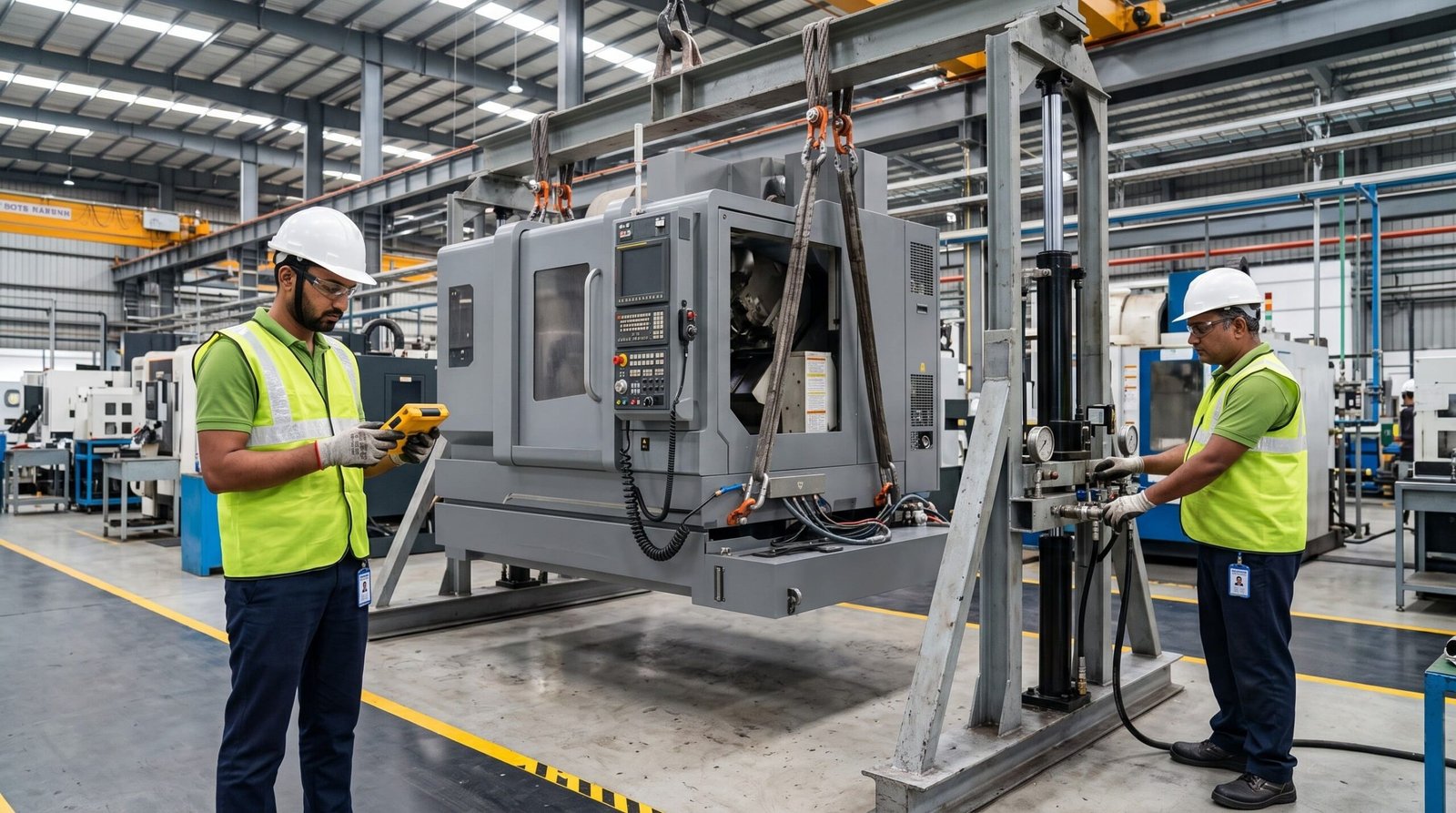
Machine shifting services India 2026 is a market that looks simple from the outside and reveals its complexity only when something goes wrong.
A factory owner calls three vendors. Gets three quotes. Picks the cheapest. The machine arrives at the new site with a cracked column casting, a bent ball screw, and a controller that trips on startup. The repair bill is six times the money saved on the vendor selection. The production line is down for three weeks instead of three days.
This happens constantly in India’s machine shifting industry. Not because the risks are unknown, but because most buyers do not know what questions to ask before they hand over their equipment.
India’s industrial equipment shifting market is estimated to grow at 8 to 10% CAGR, driven by the manufacturing, power, and construction industries. That growth is bringing new vendors into the market every month. Not all of them have the engineering capability, the specialized equipment, or the experience to handle industrial machinery safely.
This guide gives you everything you need to choose the right machine shifting service provider in India in 2026 — and shows you what the leading providers actually offer.
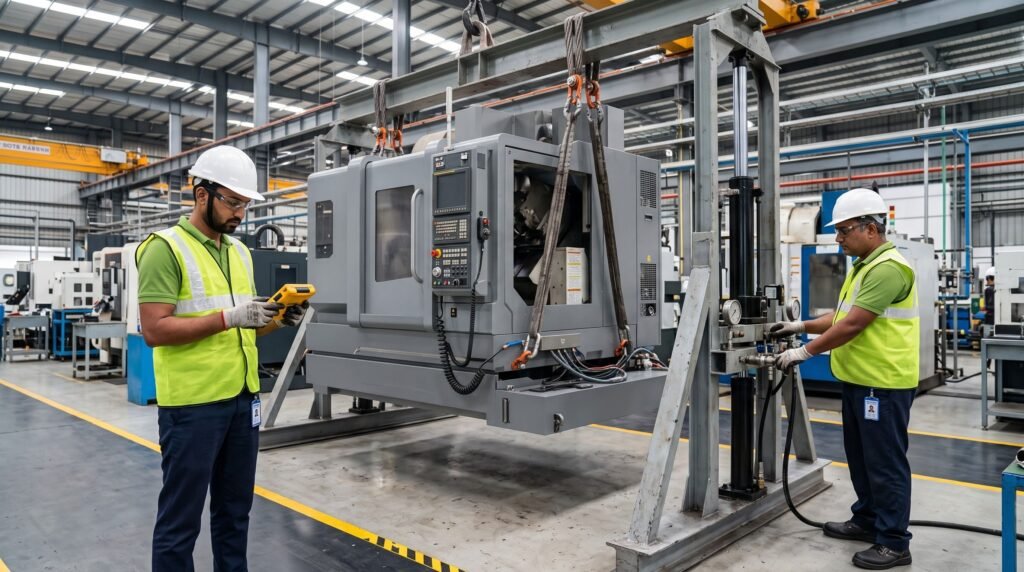
Table of Contents
- Machine Shifting Services India 2026: What You Are Actually Buying
- The 5 Criteria That Separate Specialists from Generalists
- What Zero-Damage Protocol Actually Means in Practice
- Why Dismantling and Reassembly Capability Is Non-Negotiable
- Machine Types and What Each One Requires
- Questions to Ask Any Provider Before You Sign
- Why One World Logix Leads Machine Shifting Services India 2026
1. Machine Shifting Services India 2026: What You Are Actually Buying
When you hire a machine shifting company, you are not buying transport. You are buying a complete engineering service that includes assessment, dismantling, packing, transport, reinstallation, alignment, and commissioning.
Every phase of that sequence has distinct technical requirements. The assessment phase requires engineers who understand your specific machine type — its dismantling sequence, its critical alignment parameters, its utility connections. The packing phase requires anti-vibration crating and anti-static protection appropriate for the machine’s precision components. The transport phase requires vehicles appropriate for the machine’s weight and dimensions. The reinstallation phase requires the same engineering competence as the dismantling phase, applied in reverse — with the additional requirement of precision leveling and alignment at the new site.
One World Logix provides machine shifting services including complete reinstallation, alignment, electrical reconnection, trial run and commissioning at the new site.
A company that defines its service as ending at delivery has given you half a service. The machine is at the new site. Whether it runs correctly at the new site is a separate question — and the answer depends entirely on the quality of the reinstallation and commissioning work.
The first question to ask any machine shifting company: what exactly does your service include after the machine arrives at the new site?
2. The 5 Criteria That Separate Specialists from Generalists
Use these five criteria to evaluate every machine shifting service provider you consider.
Criterion 1: In-house engineering team. Does the company have mechanical and electrical engineers on staff, or do they hire labour per project? In-house engineers provide consistent technical quality across every phase. Ad-hoc labour provides variable quality and no accountability when something goes wrong.
Criterion 2: Specialized equipment owned, not rented. A professional machine shifting company owns hydraulic jacks, skates, gantry systems, anti-vibration crating, and appropriate transport vehicles. Companies that rent all their equipment for each project are coordinators, not specialists. When your project needs lifting equipment on a specific day, owned equipment is available. Rented equipment is available if the rental company has it available.
Criterion 3: Sector-specific experience. CNC machine shifting is different from pharmaceutical machine shifting. Injection moulding machine shifting is different from furnace relocation. A company that has only shifted one type of machine may not have the experience to handle the specific requirements of your equipment. Ask for references from clients in your industry.
Criterion 4: Full-scope service from dismantling to commissioning. The company you hire should be accountable for the machine running correctly at the new site, not just arriving there. If the company’s scope ends at delivery, you carry all the risk of commissioning problems that result from their handling during dismantling and transport.
Criterion 5: Documented quality process. For ISO-certified factories and regulated industry clients, every machine shift requires documentation — pre-move condition records, calibration data, commissioning sign-offs. A company that provides this as standard is a professional. A company that does not has never worked with clients who require it.
3. Machine Shifting Services India 2026: What Zero-Damage Protocol Means
Every machine shifting company in India claims to offer zero-damage service. Very few can explain what that actually means in practice.
Zero-damage protocol is not a promise. It is a documented set of procedures applied at every phase of the machine shift to eliminate the specific causes of damage that occur during industrial equipment relocation.
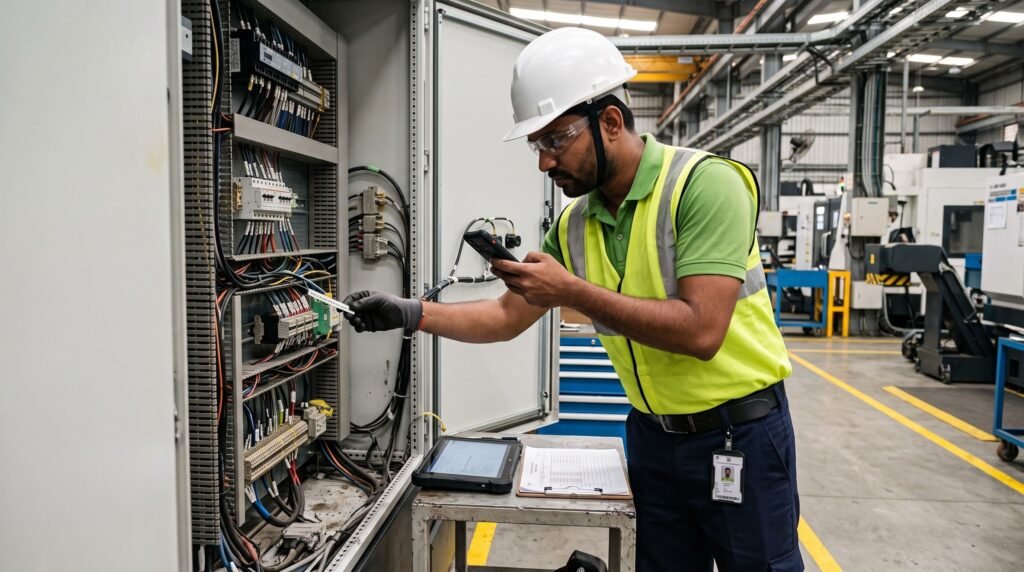
During dismantling, zero-damage protocol means photographing every cable connection, every mechanical interface, and every utility connection before it is disturbed. It means using the correct tools for each fastener and each coupling. It means tagging and bagging every bolt, every pin, and every component so that reassembly can be performed without guesswork.
During packing, zero-damage protocol means custom anti-vibration crating for precision components — spindles, ball screws, linear guides, optical scales — that are sensitive to the vibration frequencies generated during road transport. It means anti-static packaging for control panels and electronic components. It means moisture barriers for equipment that will be in transit for more than 24 hours.
During transport, zero-damage protocol means vehicle selection appropriate to the machine’s weight and dimensions. It means securing the machine to the transport bed at the correct points, not wherever is convenient. It means route planning that avoids roads with severe potholes or bridge weight restrictions. It means driver briefing on cargo sensitivity.
During reinstallation, zero-damage protocol means precision leveling using calibrated instruments, not visual estimation. It means alignment verification at every mechanical interface before final tightening. It means a documented trial run before the machine is handed back to the client.
Zero-damage is not achieved by being careful. It is achieved by following a documented process that eliminates the specific failure modes that cause damage.
4. Why Dismantling and Reassembly Capability Is Non-Negotiable
The most common mistake factory owners make when selecting a machine shifting service is treating dismantling and reassembly as simple tasks that any competent worker can perform.
A CNC machining center is not assembled in the same sequence for every installation. The spindle, the axis drives, the tool changer, and the control cabinet each have specific handling requirements during dismantling and specific alignment requirements during reassembly. Getting any of these wrong creates problems that may not surface until the machine is running production — and by then, the machine shifting company is long gone.
Injection moulding machines have platen alignment requirements measured in tenths of a millimeter. A platen that is 0.3mm out of parallel will cause uneven mould wear, short shots on one side of the cavity, and eventually a mould crash. None of this is obvious when the machine is first powered up. It shows up in production data over weeks.
Pharmaceutical packaging lines have validation requirements. After relocation, the line must be re-validated under FDA or CDSCO protocols before it can produce product for sale. Companies that try to skip this step or use a machine shifting company without pharmaceutical experience discover the consequences during their next audit.
One World Logix shifts all industrial machines including CNC machines, VMC machines, heavy presses, injection moulding machines, stamping machines, assembly lines, generators, transformers, conveyors, and complete production units from 1 tonne to 500 tonnes. That range of machine types requires different engineering knowledge for each category — and experience across all of them.
5. Machine Types and What Each One Requires
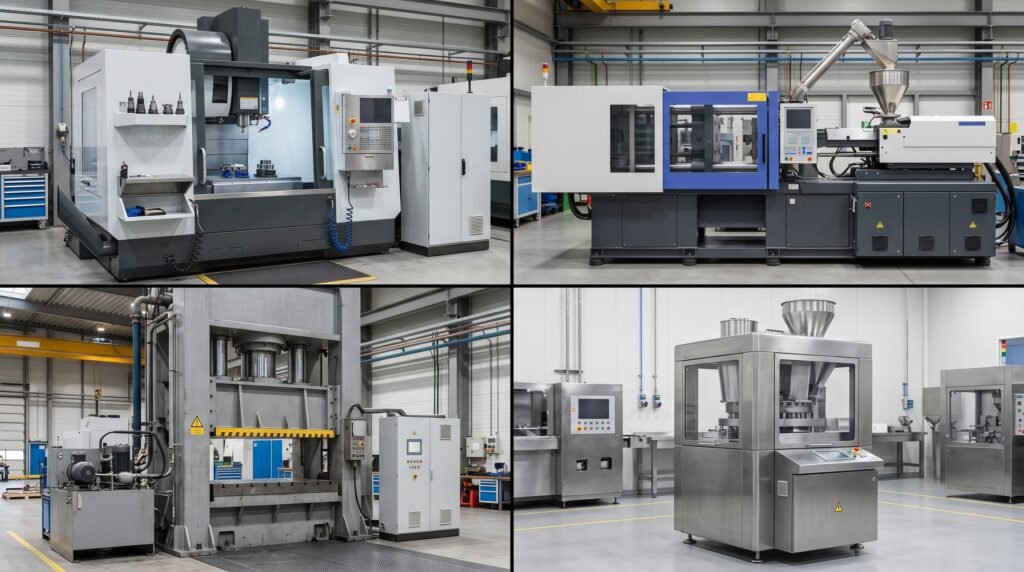
Different machine types have different requirements when using machine shifting services India 2026. Understanding what your specific machine needs helps you evaluate whether a vendor is actually qualified.`
CNC Machines. Precision instruments with spindles, ball screws, and linear guides that are sensitive to vibration and mishandling. Require anti-vibration transport, careful leveling at new site with laser alignment tools, and spindle warm-up procedure before production. Full recommissioning including tool offset verification is essential.
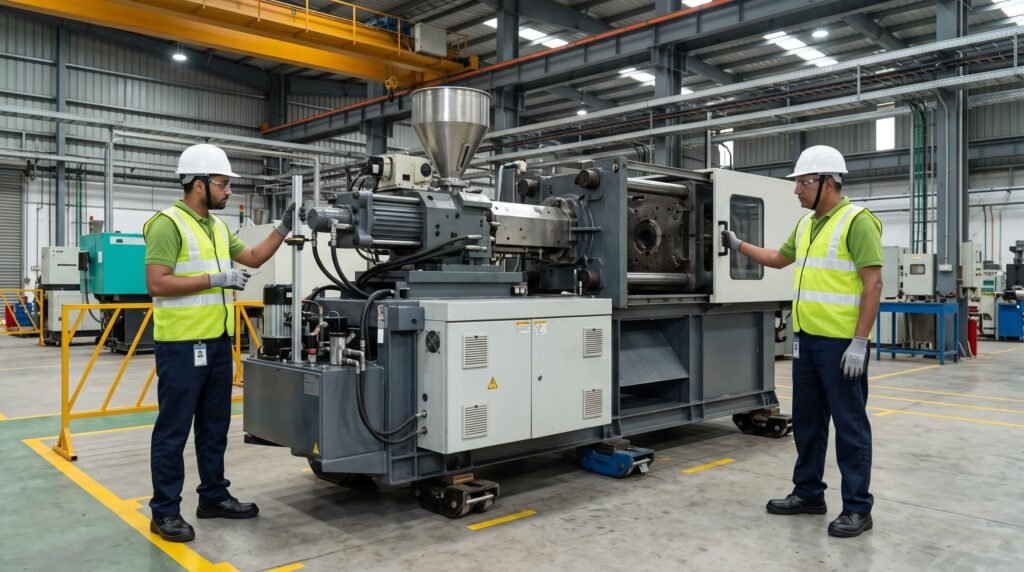
Injection Moulding Machines. Heavy machines from 50 to 3,000 tons requiring specialized lifting at both ends. Platen alignment after relocation is critical for mould life and part quality. Hydraulic and electrical systems require careful disconnection and reconnection by engineers familiar with the specific brand and model.
Heavy Presses. From mechanical stamping presses to hydraulic forming presses, these machines often require foundation work at the new site — anchor bolts, anti-vibration mounts, or concrete work. Crane hire is typically required for loading and unloading machines above 10 tons.
Pharmaceutical Equipment. Tablet presses, coating machines, granulators, and packaging lines require contamination control throughout the shift — sealed packing, clean transport, and documented cleaning protocols before reinstallation.
Generators and Transformers. Require oil drainage before transport, specialized handling for the core and winding assembly, and recommissioning including oil refill, electrical testing, and load testing at the new site.
Production Lines and Assembly Lines. The most complex category — multiple interdependent machines that must be dismantled in sequence, transported in the correct order, and reinstalled in the correct sequence. Requires full line mapping before dismantling begins.
6. Questions to Ask Any Provider Before You Sign
Use this list in every vendor conversation before committing to any machine shifting services India 2026 decision.
1.Do you have mechanical and electrical engineers on staff, or do you hire labour per project?
2.What specialized equipment do you own, specifically for lifting and transporting machines of my weight range?
3.Can you show me a documented dismantling and recommissioning procedure for my specific machine type?
4.What does your service include after the machine arrives at the new site — and what is excluded?
5.Can you provide references from clients who have shifted the same type of machine in my industry?
6.What transit insurance do you carry, and does it cover the full replacement value of my equipment?
7.What is your documented process if the machine does not commission correctly at the new site?
8.Do you provide calibration records and commissioning documentation as standard?
.A company with real industrial machine shifting experience will have specific, confident answers to every one of these questions. Vague or defensive responses are data.
7. Why One World Logix Leads Machine Shifting Services India 2026
One World Logix is listed as the top-rated Machine Shifting Services supplier on IndiaMART as of August 2026 — independently verified by buyer reviews and inquiry volume. That position reflects 14 years of consistent delivery across the most demanding machine shifting projects in India and internationally.
What makes One World Logix the leading machine shifting services India 2026 provider, different from every other company in this market:
We own our equipment. Hydraulic jacks, skates, gantry systems, anti-vibration crating, and specialized transport vehicles are owned assets operated by our trained staff. Not rented for each project. Not subcontracted to whoever is available.
We have in-house engineers at every phase. The same mechanical and electrical engineers who assess your machine plan the dismantling, supervise the disconnection, manage the transport, and execute the recommissioning. One team, one accountability, from first site visit to final production sign-off.
We cover 9 industrial sectors. Automotive, battery and renewable energy, plastic and rubber, FMCG, food and beverage, healthcare and biotech, solar, pharmaceutical, and cement. Sector-specific experience is not a claim. It is 14 years of actual project delivery across all of them.
We operate pan-India and globally. One World Logix provides machine shifting services across all major states including Mumbai, Pune, Delhi NCR, Bangalore, Hyderabad, Chennai, Ahmedabad, Kolkata, Surat, Jaipur, Coimbatore and 30 cities pan India. For international machine shifting — importing equipment from Germany, Japan, South Korea, or Taiwan, or relocating Indian production lines to other countries — our Global Field Engineer network in 30+ countries handles the complete scope.
We define completion as the machine running correctly. Our service does not end when the equipment is delivered. It ends when the machine has completed a documented trial run, calibration records are signed off, and the commissioning handover is complete.
ISO 9001:2015 and ISO 20000 certified. IAM certified. GEM empaneled. MSME registered.
📞 +91-882-882-0887
📧 info@oneworldlogix.com
🌐 oneworldlogix.com/owl/machine-shifting/
Get a free site assessment for your machine shifting project today.