
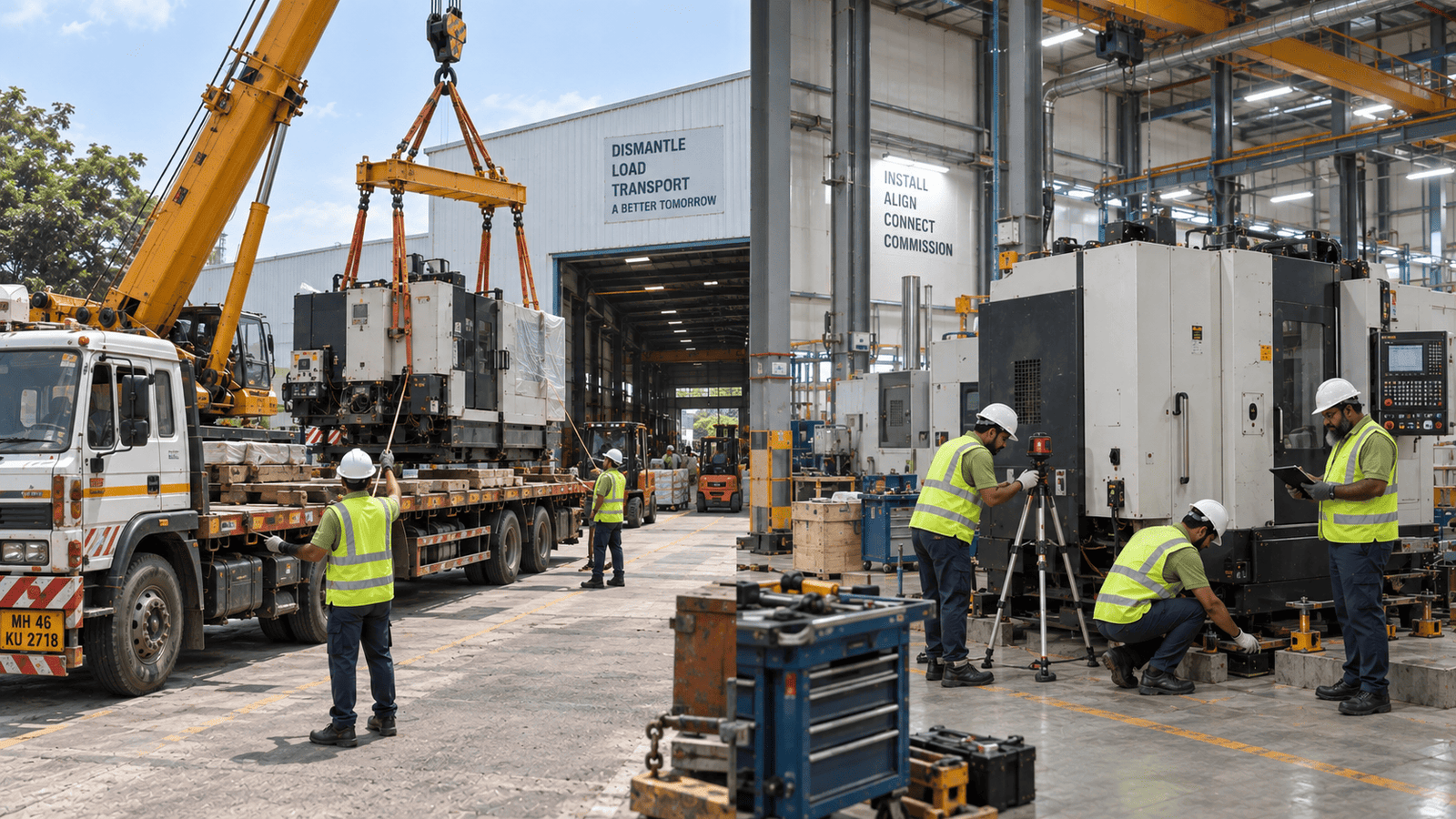
Turnkey project relocation is what businesses reach for when moving a factory, plant, or facility is too big and too risky to hand to five different vendors and hope they all line up.
The idea borrows from turnkey construction, where one contractor owns the whole job and hands over a facility the client can operate by simply turning the key. Applied to a move, it means a single partner takes end-to-end responsibility for lifting an entire operation from one site and rebuilding it, fully working, at another.
India’s manufacturing capex is running hot, with plants expanding, relocating, and consolidating across sectors like pharma, chemicals, food processing, automotive, and electronics. As these moves grow in scale, turnkey project relocation is becoming the model that serious operators prefer, because it removes the biggest risk in any large move: the gaps between vendors.
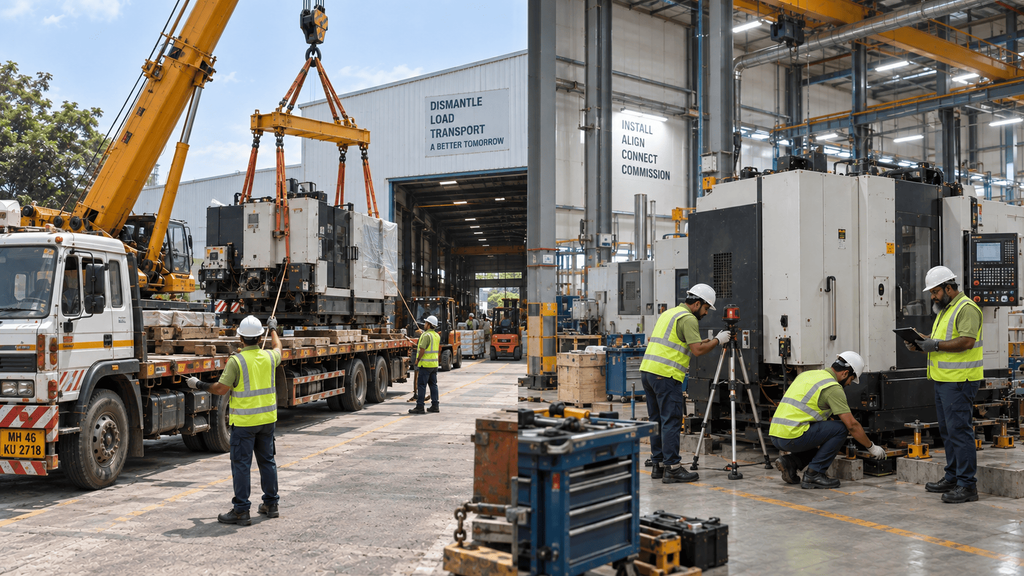
Table of Contents
- What Turnkey Project Relocation Actually Means
- Why Businesses Are Choosing the Turnkey Model in 2026
- The Phases of a Turnkey Relocation
- Single Contract vs Multi-Vendor: Where Moves Go Wrong
- The Zero-Downtime Factor
- What to Check Before You Choose a Partner
- How One World Logix Delivers Turnkey Project Relocation
1. What Turnkey Project Relocation Actually Means
In a turnkey model, one contractor is responsible for the complete scope of work under a single contract, from planning right through to operational handover. The client receives a facility that is ready to run, with minimal day-to-day involvement during execution.
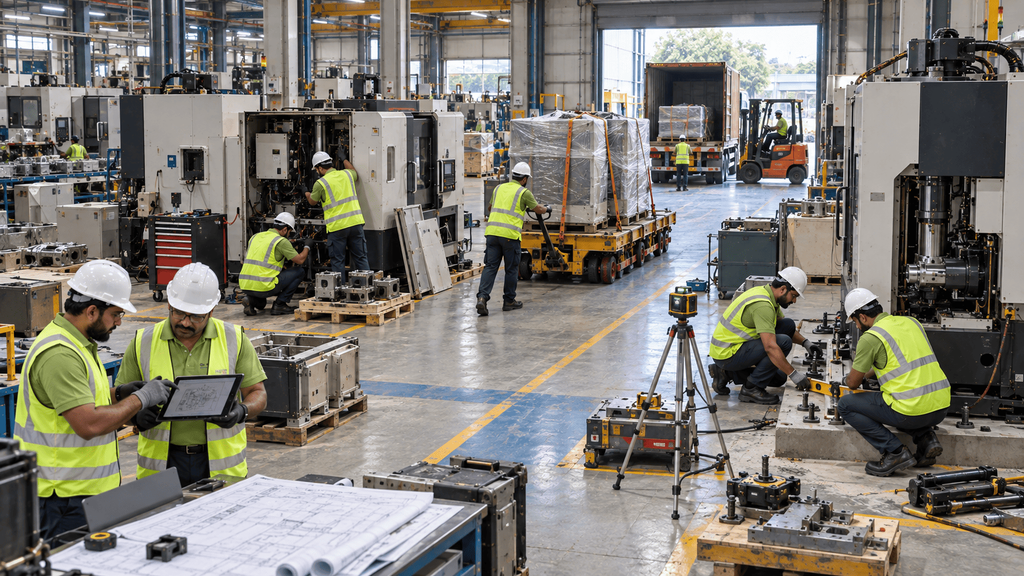
Turnkey project relocation applies that same principle to a move. Instead of hiring a separate surveyor, packer, transporter, rigging crew, electrician, and commissioning engineer, the business hands the entire relocation to one accountable partner. That partner plans the move, dismantles the equipment, transports it, reinstalls it, reconnects utilities, and runs commissioning, so the client walks into a working site rather than a room full of crates.
2. Why Businesses Are Choosing the Turnkey Model in 2026
India’s industrial sector is in an active capex phase, and companies are moving plants for many reasons: expansion, consolidation after mergers, shifting out of residential-encroached zones, or relocating closer to ports, raw materials, or PLI clusters. Every one of those moves is complex, and complexity is exactly where multi-vendor projects fail.
The turnkey model wins because it removes coordination risk. With one partner owning the timeline, there is no finger-pointing when a step is missed, no waiting for one contractor to finish before another can start, and one clear line of accountability from first survey to final sign-off. For a business that cannot afford a botched move, turnkey project relocation is simply the safer way to run it.
3. The Phases of a Turnkey Relocation
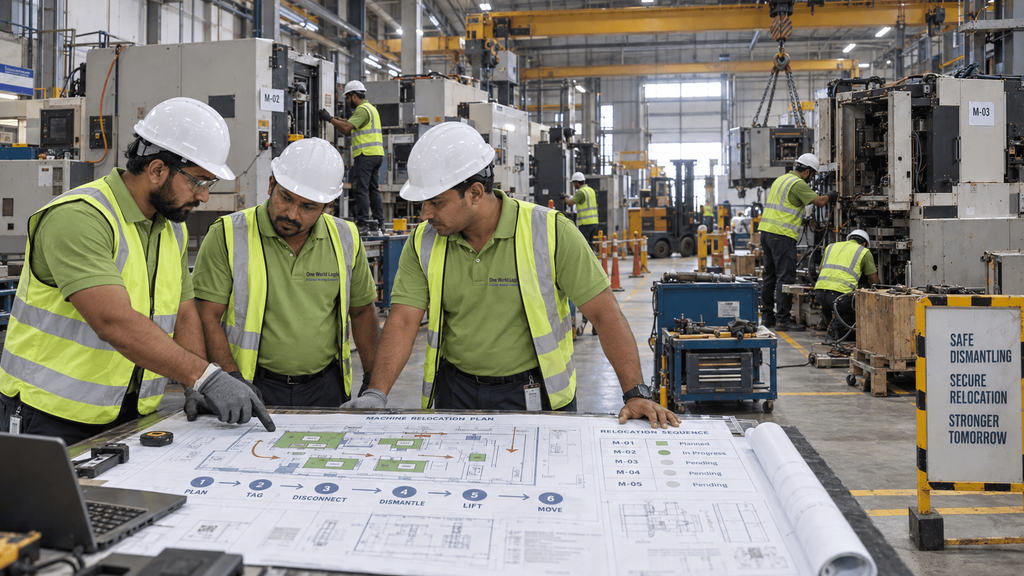
A well-run turnkey relocation moves through a clear sequence. It starts with a feasibility and site assessment at both the old and new locations, mapping every asset, utility, and dependency. That feeds a detailed relocation plan that sequences what moves, when, and in what order.
Then comes execution: dismantling machines and systems in the correct order, protective packing, transport sized to the load, and precise reinstallation at the destination. Utilities are reconnected, alignment is verified, and the site goes through commissioning and a trial run before handover. Only when everything is running to the original baseline is the project called complete. That end-to-end ownership is the heart of turnkey project relocation.
4. Single Contract vs Multi-Vendor: Where Moves Go Wrong
Most large moves that go over budget or over time do so for the same reason: the gaps between vendors. The civil work does not match the equipment specs. The electrician arrives before the machines are placed. The transporter damages a unit and the packer blames the rigger. Each vendor is doing their bit, but nobody owns the whole.
A single-contract turnkey approach closes those gaps. One team plans and executes every phase, so the handoffs happen inside one organisation instead of across four contracts. This is the same discipline used in precision industrial machine shifting, scaled up to an entire facility. Fewer interfaces means fewer failures, and that is why turnkey project relocation consistently beats the multi-vendor route on both time and cost.
5. The Zero-Downtime Factor
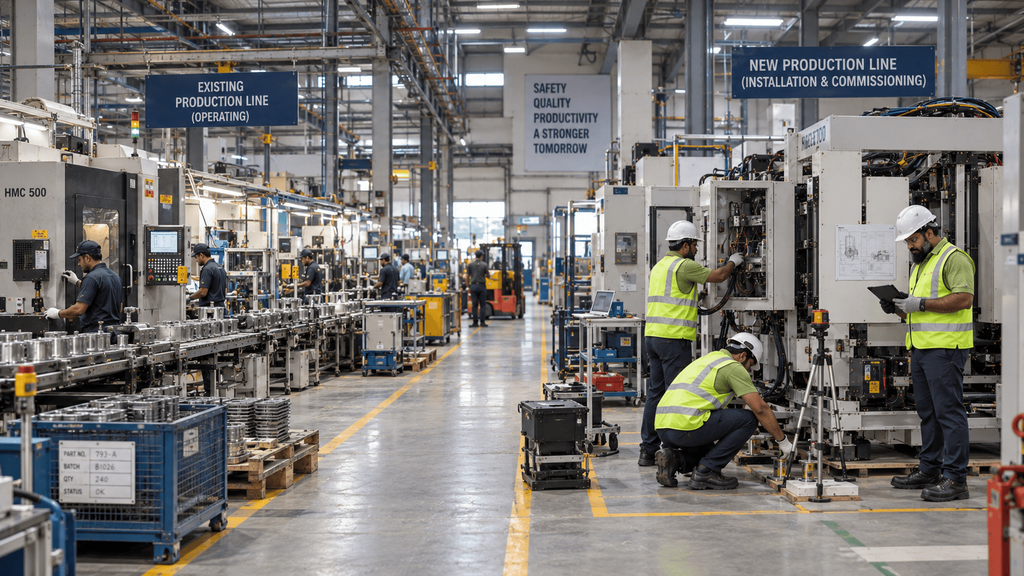
For most businesses, the real cost of a relocation is not the move itself. It is the production or service downtime around it. A turnkey partner plans the whole move backwards from the restart deadline, so the new site is ready before the old one shuts, and critical systems come back live first.
Where a business cannot stop at all, the move is phased, with one line or department shifting while the rest keep running, or executed over a weekend or planned window. Getting this right needs a partner who treats uptime as the primary goal, not an afterthought. In turnkey project relocation, protecting business continuity is built into the plan from day one.
6. What to Check Before You Choose a Partner
Not every company that says turnkey can actually deliver it. Check that the partner has its own engineers and equipment rather than subcontracting the hard parts, because owned capability is what keeps a single-contract promise real. Ask for references from moves of your size and sector.
Confirm that the scope genuinely runs from planning to commissioning, in writing, and that transit insurance covers the real value of your equipment. Ask how they handle utilities, alignment, and the trial run, and what happens if something does not commission cleanly. A serious turnkey project relocation partner will have specific, confident answers to every one of these.
7. How One World Logix Delivers Turnkey Project Relocation
One World Logix runs relocations as complete, single-accountability projects. As India’s Zero-Downtime Migration Specialists, the team owns the full scope: site assessment, planning, dismantling, packing, transport, reinstallation, alignment, and commissioning, so the client receives a working facility, not a pile of crates and a list of pending vendors.
In-house mechanical and electrical engineers run every phase, backed by owned lifting and transport equipment rather than subcontracted crews. With 14 years of experience, operations across 30 plus cities and 30 plus countries, and IAM, GEM, MSME, and ISO 9001:2015 certification, One World Logix handles turnkey project relocation for plants, offices, data centres, and complete production units, within India and across borders. Completion is defined as your operation running correctly at the new site, not simply the equipment arriving there. You can also explore the full factory and plant relocation service for scope details.
If you are planning a plant, facility, or full-site move this year, get a free site assessment before you commit to anyone.
Call: +91-882-882-0887
Email: info@oneworldlogix.com
Website: oneworldlogix.com/owl
Get a free site assessment for your turnkey relocation today.