
This one just broke today.
STT Global Data Centres India is considering an initial public offering in Mumbai, known as the STT GDC India IPO 2026, that could raise as much as $500 million, as investor demand for digital infrastructure accelerates.
For most people, an IPO news story is just another business headline. But for anyone who works in enterprise IT, runs a data center, or makes infrastructure decisions for their company—this announcement about the STT GDC India IPO 2026 tells you something important about where India’s data center industry is headed, how fast it is moving, and what that means for your business in 2026.
Let us break it all down.
Table of Contents
- Who Is STT GDC India — The Company Behind the IPO
- What the $500 Million IPO Actually Means
- STT GDC’s India Footprint — 30 Data Centers, 10 Cities, 400MW
- Why This IPO Is Happening Right Now
- What This Means for India’s Data Center Market in 2026
- What Indian Enterprises Should Take Away From This
- How One World Logix Supports India’s Data Center Growth
1. Who Is STT GDC India — The Company Behind the IPO
Before we get into the IPO details, it helps to understand exactly who STT GDC India is—because this is not a startup making its debut.
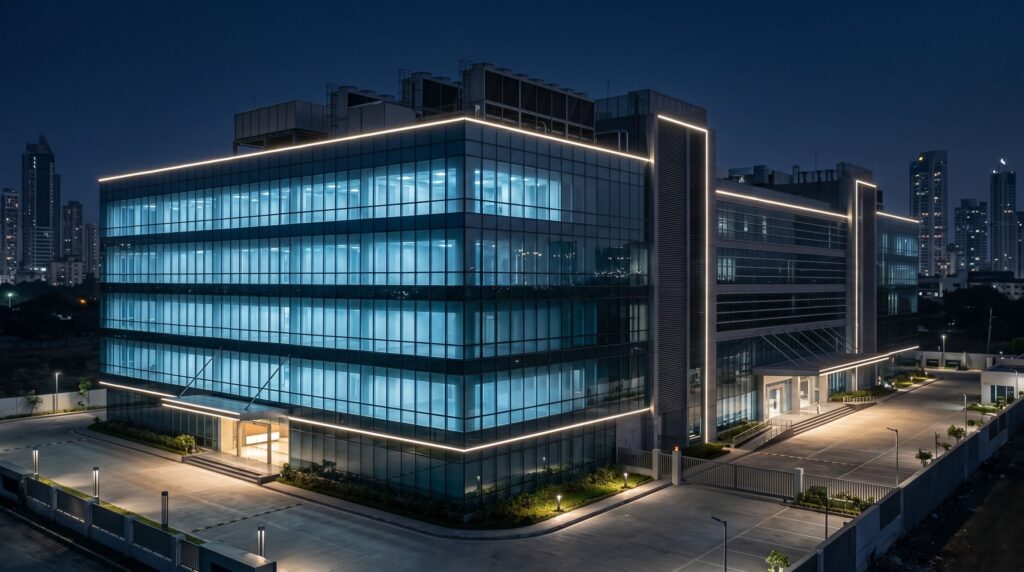
STT GDC India is the Indian arm of ST Telemedia Global Data Centres, the Singapore-based data center platform. ST Telemedia holds the 74% controlling stake in the India business, with Tata Communications retaining the remaining 26% from the original 2016 joint venture.
In February 2026, global investment firm KKR and Asia’s leading communications technology group Singtel signed definitive agreements to acquire the remaining 82% stake in ST Telemedia Global Data Centres for a total consideration of approximately US$5.1 billion — representing an implied enterprise value of approximately US$10.9 billion.
In simple terms, this is a company backed by Tata Communications, now owned by KKR and Singtel, with a Singapore parent that was valued at nearly $11 billion in its most recent transaction. This is serious institutional money, serious infrastructure, and a serious IPO.
STT GDC India generated a revenue of ₹2,460 crore for the financial year ending March 31, 2025—with a compounded annual growth rate of 21% in the last year alone.
That kind of growth rate is what attracts a $500 million public offering.
2. What the $500 Million IPO Actually Means
STT GDC India is targeting a valuation of between $5 billion and $5.5 billion. The draft prospectus is expected to be filed with Indian financial regulators within the next two to three months. Investment banks have been invited to pitch for advisory roles, with mandates expected to be awarded by the end of May 2026.
To put that valuation in context—a $5 billion valuation for an Indian data center company would make this one of the largest technology infrastructure listings in Indian stock market history.
STT GDC India would be near the front of what is shaping up to be a crowded 2026 data center listing queue. Sify Infinit Spaces has SEBI clearance for a ₹3,700 crore listing that will become the first pure-play data center IPO in India when it prices. Yotta Data Services has signaled a $900 million Mumbai listing aimed at the fourth quarter, valuing it at close to $6 billion.
Three major data center IPOs potentially happening in India in 2026. That is not a coincidence. That is a market signal.
Globally, the comparable trade is already running—Blackstone has filed for a $1.75 billion AI-era data center REIT, and the demand-side argument for an Indian listing is not subtle. Google has committed $15 billion to a southern Indian data center hub; Microsoft, $17.5 billion to expand its footprint; and India’s February budget added a 20-year tax holiday for foreign cloud customers anchoring capacity in India through 2047.
3. STT GDC’s India Footprint — 30 Data Centers, 10 Cities, 400MW
This is what makes the STT GDC IPO genuinely significant — the company is not a niche player. It is one of the largest data center operators in India by any measure.
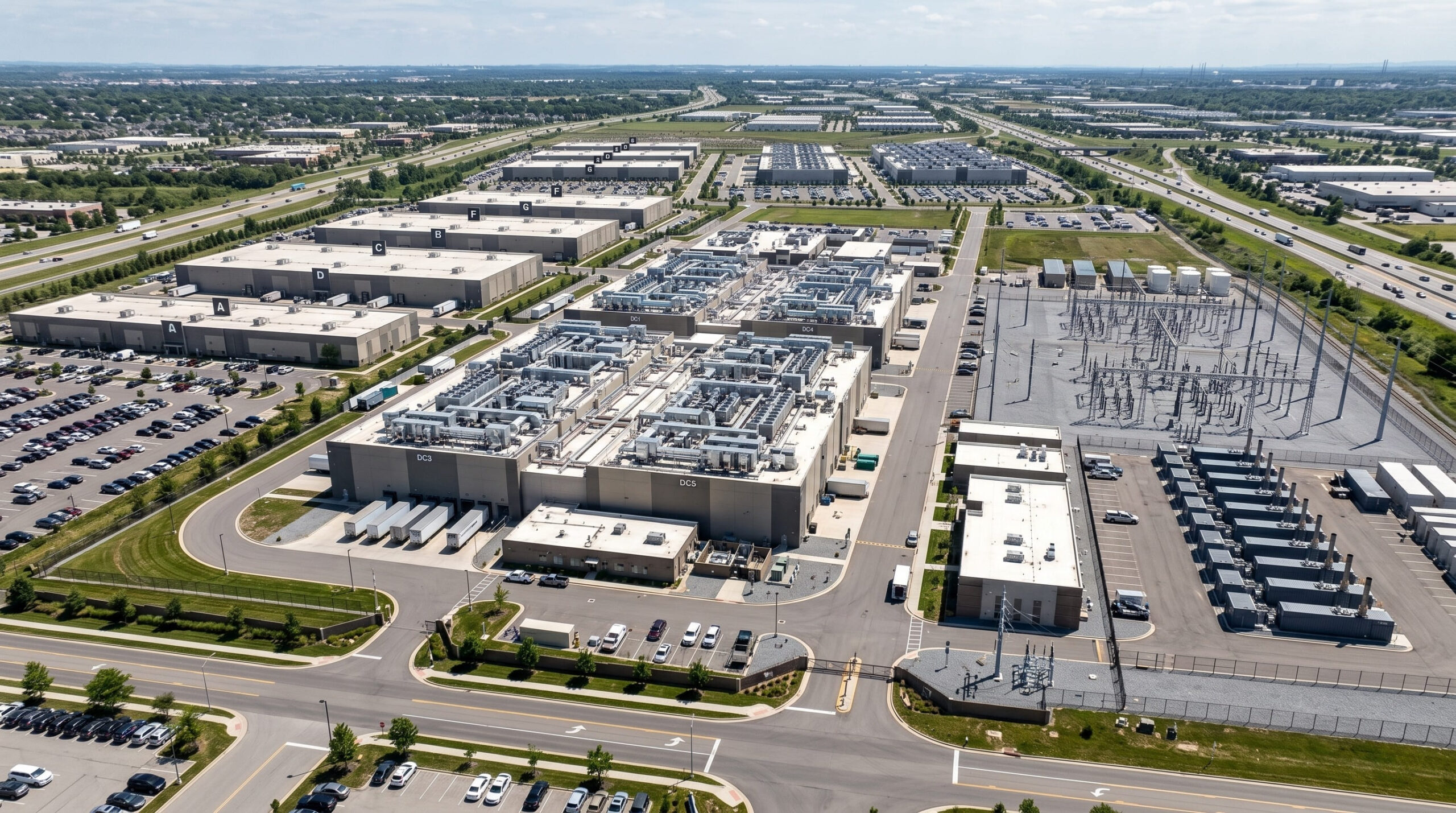
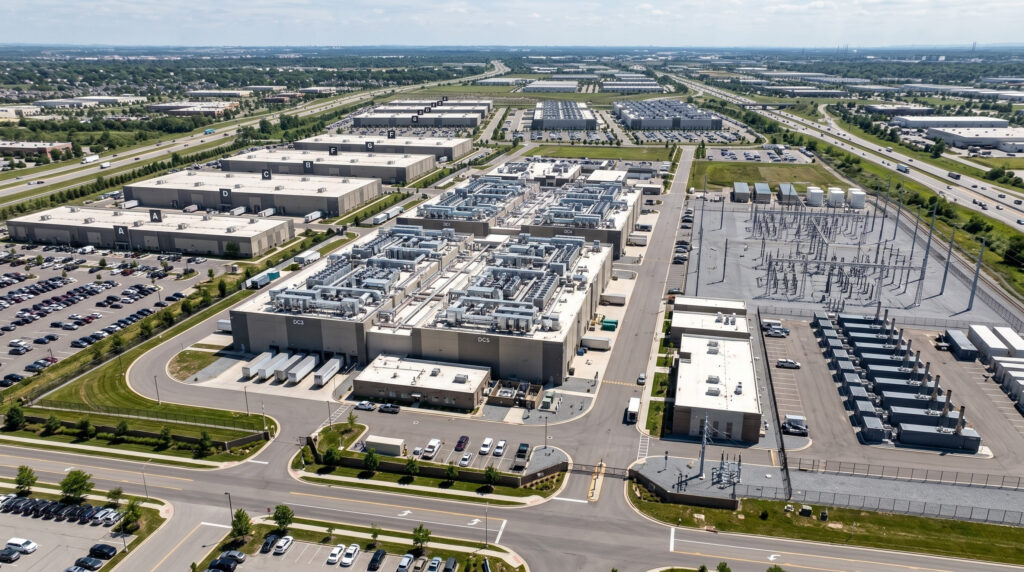
Across India, STT GDC totals some 30 data centers spanning 10 cities and more than 400 MW of critical IT load capacity. The company has signed strategic MoUs with the governments of Karnataka, Maharashtra, Telangana, and Uttar Pradesh to develop large-scale, AI-ready data centers. Expansion plans are progressing across Mumbai, Noida, Pune, Jaipur, Hyderabad, and Bengaluru.
That is a national footprint that very few Indian companies — in any sector — can match.
In February 2026, STT GDC committed ₹4,200 crore to a 45 MW AI-ready campus in Chennai. The company launched its fourth data center in Chennai at the Siruseri campus — the STT Chennai 7 — designed as a 45 MW AI-ready facility, with the first phase of 7.2 MW now operational.
STT GDC also operates a Navi Mumbai campus in MIDC Mahape, Navi Mumbai—featuring three data centers as part of its multi-megawatt capacity expansion plan.
For enterprises in Mumbai and Navi Mumbai specifically, STT GDC is not a distant national player. It is a local infrastructure provider with facilities in the same industrial zones where many companies operate.
4. Why This IPO Is Happening Right Now
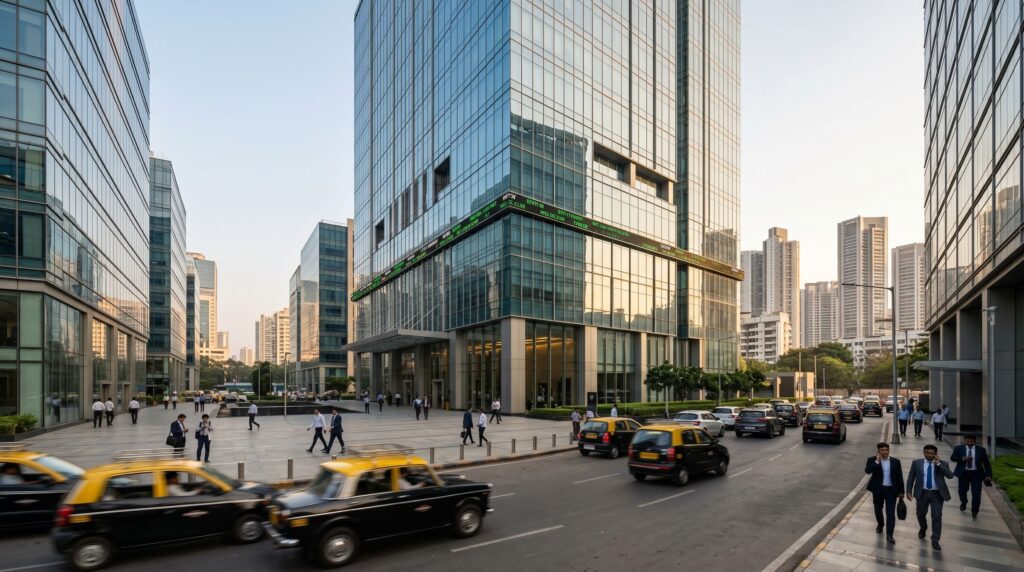
The timing of the STT GDC India IPO is not accidental. It sits at the intersection of several converging trends that have made 2026 the ideal moment to take an Indian data center company public.
India’s data center market is exploding. India’s data center capacity is projected to double from 0.9 GW in 2023 to approximately 2 GW by 2026. The digital economy is expected to contribute 20% of India’s national income by 2030. These numbers create the demand narrative that any IPO prospectus needs.
AI is driving unprecedented infrastructure investment. Every major technology company on earth is racing to build AI-ready infrastructure. India — with its large English-speaking developer population, competitive electricity costs, and improving connectivity — has become a primary target for that investment. Data centers are the physical foundation of AI. Building them is the business to be in right now.
Government policy is actively supportive. The Union Budget 2026-27 announced a tax holiday until 2047 for eligible foreign cloud service providers operating through India-based data center infrastructure. That kind of policy certainty is exactly what institutional investors need to commit capital to a long-duration infrastructure business.
Global investors are hungry for digital infrastructure assets. The KKR-Singtel acquisition of STT GDC’s parent for $5.1 billion earlier this year demonstrated that global institutional capital sees Indian data center assets as premium investments. An Indian IPO taps the same investor appetite from the domestic market.
The parent company needs capital for expansion. STT GDC India has signed MoUs with four state governments for new facilities. Executing that expansion pipeline requires capital — and a public listing is the most efficient way to raise it at scale.
5. What This Means for India’s Data Center Market in 2026
The STT GDC IPO — combined with the Sify and Yotta listings in the pipeline — signals something important about where India’s data center industry stands in 2026.
Data centers are now mainstream infrastructure assets. When companies of this scale and quality go public, it signals that the asset class has matured. Data centers are no longer niche-technology real estate. They are core national infrastructure—as important as airports, ports, and power grids.
Competition for colocation space will intensify. With STT GDC, Yotta, and Sify all raising capital for expansion simultaneously — and with Google, Microsoft, AWS, and other hyperscalers building their own facilities — the supply of data center capacity in India is about to increase significantly. For enterprises that have been waiting for better colocation options or more competitive pricing, 2026 and 2027 will bring more choices than ever before.
Migration activity will accelerate. Every new data center facility that comes online creates migration activity — companies moving workloads from older, less efficient facilities to new AI-ready ones. Companies are relocating from international facilities to India-based ones. Companies are upgrading from on-premise server rooms to professional colocation environments. This migration wave is already underway and will accelerate as new capacity comes online.
Navi Mumbai’s importance is growing. With STT GDC’s Navi Mumbai campus expanding and multiple new projects announced in the region, Navi Mumbai is cementing its position as India’s premier data center hub. Companies with IT infrastructure in the region need partners who understand this local market — its facilities, its connectivity options, and its migration requirements.
6. What Indian Enterprises Should Take Away From This
If you are an IT head, CIO, or operations manager reading about the STT GDC IPO, here is what it practically means for your business decisions in 2026:
Your colocation options are about to improve significantly. As STT GDC raises capital and expands, as Yotta and Sify list and grow, the quality and availability of professional colocation in India will reach levels that previously required going to Singapore or the UAE. If you have been running your own server room because colocation options were not good enough, that calculation is changing.
The window for legacy infrastructure is closing. Enterprises running on aging on-premise hardware in their own facilities are increasingly at a disadvantage—in terms of energy efficiency, connectivity, reliability, and access to AI-ready infrastructure. The companies that migrate to professional data center environments in 2026 will have a significant operational advantage over those that wait.
Migration planning needs to start now. Moving from an on-premise server room to a professional colocation facility, or from an older facility to a newer AI-ready one, is not a weekend project. It requires assessment, planning, specialized handling of IT equipment, and a phased execution that keeps your business running throughout. Starting that planning process now — before the deadline pressure of a lease expiry or a hardware failure — is always the right decision.
India is the safe, smart destination for Middle East infrastructure. For Indian enterprises with IT infrastructure in the UAE, Bahrain, or other conflict-affected Middle East locations, the combination of India’s expanding data center ecosystem and the current geopolitical situation makes migrating infrastructure to India-based facilities both safer and more commercially sensible than it has ever been.
7. How One World Logix Supports India’s Data Center Growth
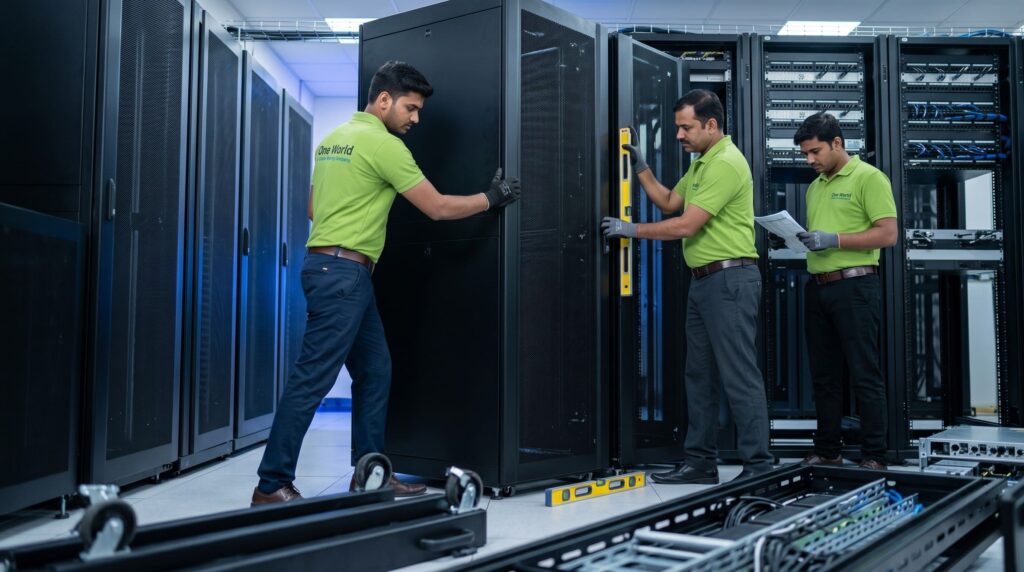
The STT GDC IPO and the broader data center expansion happening across India in 2026 create exactly the kind of migration activity that One World Logix was built for.
Every new data center that comes online needs enterprises to migrate into it. Every company upgrading from an old facility to a new AI-ready one needs to physically move its IT infrastructure. Every enterprise relocating workloads from the Middle East to India needs a partner who can handle the physical relocation — not just the cloud migration.
That physical layer—the servers, the storage arrays, the networking equipment, the cables, and the racks—does not move itself. It needs to be carefully assessed, professionally packed, safely transported, and correctly reinstalled and commissioned at the new facility.
This is what One World Logix has done for 14 years, across India and 30+ countries worldwide.
Data Center Migration Services: We handle the complete physical relocation of IT infrastructure — from site assessment and dependency mapping through to reinstallation, commissioning, and post-migration support. Whether you are moving into an STT GDC facility, a Yotta campus, or any other colocation environment, we have the expertise to execute the physical migration without disrupting your operations.
Navi Mumbai Expertise: With our headquarters in CBD Belapur, Navi Mumbai, and STT GDC’s campus in MIDC Mahape just down the road, we know this market, we know these facilities, and we have the local presence to respond quickly when you need us.
Global Field Engineer Support: For enterprises migrating infrastructure from international locations to Indian data centers, our Global FE network means we have engineers on the ground wherever your existing infrastructure is located—UAE, Bahrain, Singapore, the UK, Germany, and 25+ other countries.
Certified and Compliant: IAM certified, GEM empaneled, MSME registered, and ISO 9001:2015 certified. The documentation that enterprise clients and government organizations need for high-stakes infrastructure moves is included as standard on every project.
The Indian data center market is entering its most exciting phase of growth. The STT GDC IPO is one signal among many that this expansion is real, it is funded, and it is happening now.
One World Logix is ready to be your migration partner as India’s data center ecosystem grows into something the country has never seen before.
📞 +91-882-882-0887 📧 info@oneworldlogix.com 🌐 oneworldlogix.com/owl/data-center-migration/
Get a free site assessment today — and be ready for what comes next.