
Essential steps, risks, and best practices to ensure a smooth, compliant, and efficient lab relocation.
As a company that specializes in end-to-end lab relocation, we’ve seen firsthand what works, what fails, and what truly determines a successful move. This guide is designed to give decision-makers, lab managers, and research teams practical insight into what a lab relocation really involves and how to do it right the first time.
Why Lab Relocation Requires Specialized Expertise
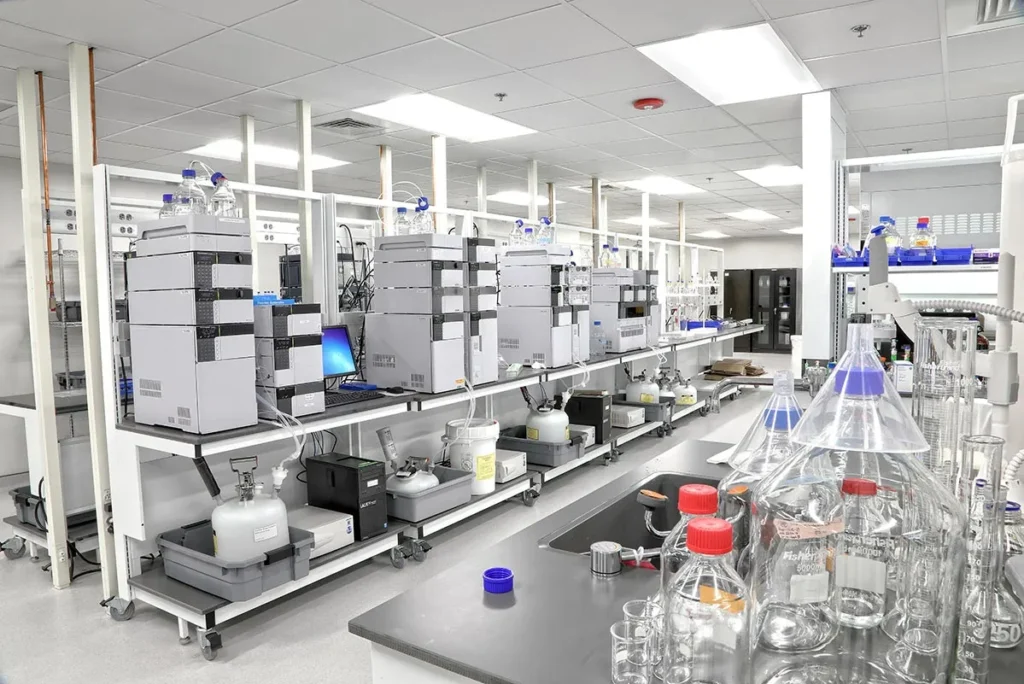
Unlike standard commercial moves, laboratories contain:
- High-precision scientific instruments
- Sensitive biological or chemical materials
- Hazardous substances requiring controlled handling
- Strict regulatory and safety obligations
Each lab environment is unique. Equipment tolerances, environmental requirements, and compliance standards vary widely which is why lab relocation cannot be treated as a generic logistics exercise.
This is exactly where our expertise comes in. We plan and execute relocations specifically for laboratories, ensuring that assets, data, and research continuity are fully protected.
1. Strategic Planning Is Non-Negotiable
A successful lab relocation begins long before the first item is packed. Strategic planning allows us to identify risks, reduce downtime, and ensure every asset arrives safely and operational.
Our planning process includes:
- Detailed lab audits and equipment assessments
- Space and utility evaluation at the new facility
- Move sequencing to protect critical experiments
- Timeline development aligned with operational priorities
- Stakeholder coordination across teams
This structured approach eliminates uncertainty and prevents costly last-minute decisions.
2. Risk Management Protects Research and Equipment
Every laboratory move carries risk the key is knowing how to manage it. We perform thorough risk assessments to address:
- Equipment sensitivity to vibration, shock, or temperature changes
- Chemical, biological, and hazardous material handling
- Regulatory and compliance requirements
- Facility readiness and infrastructure compatibility
By proactively identifying these risks, we implement protective measures, contingency plans, and safety protocols tailored to each lab.
3. Specialized Handling of Equipment and Materials
Laboratory equipment is not designed for movement. Improper handling can result in misalignment, calibration loss, or permanent damage.
Our lab relocation services include:
- Custom crating and protective packaging
- Temperature-controlled transport for sensitive samples
- Safe handling and documentation for hazardous materials
- Trained personnel experienced in lab environments
We ensure that every item — from microscopes to freezers — is transported under controlled and compliant conditions.

4. Inventory Control and Chain of Custody
During a lab relocation, visibility is critical. We maintain strict inventory control to ensure nothing is misplaced, damaged, or delayed.
Our process includes:
- Complete asset inventory and categorization
- Clear labeling and destination mapping
- Tracking systems to monitor items throughout the move
- Chain-of-custody documentation for sensitive materials
This ensures accuracy, accountability, and a faster setup once the lab reaches its new location.
5. Compliance, Safety, and Regulatory Assurance
Laboratories operate under strict regulatory frameworks. During relocation, compliance does not pause — and failure to meet requirements can lead to serious consequences.
We manage:
- Regulatory documentation and transport permits
- Hazardous material compliance
- Decontamination and site clearance
- Safety protocols for staff and movers
Our goal is to ensure your lab remains fully compliant at every stage of the relocation.
6. Minimizing Downtime and Business Disruption
Downtime is one of the biggest concerns for any lab. Our relocation strategies are designed to keep operations moving.
We achieve this by:
- Phased relocation planning
- Coordinated equipment shutdown and restart schedules
- Fast, organized reinstallation
- Immediate post-move testing and verification
This allows your team to resume work quickly and with confidence.
7. Post-Move Setup, Testing, and Validation
A lab relocation is only complete when everything is operational. After the move, we support:
- Equipment positioning and setup
- Calibration and functional testing
- Final inventory verification
- Issue resolution and optimization
This ensures your new lab environment is not just functional — but fully ready for research, testing, or production.
Why Work With Us for Your Lab Relocation
We don’t just move laboratories—we manage complex scientific transitions. Our experience, planning methodology, and specialized handling capabilities allow us to deliver lab relocations that are:
- Safe
- Compliant
- Efficient
- Low-risk
- Fully documented
By partnering with us, you gain a relocation team that understands the scientific, operational, and regulatory realities of laboratory environments.
A laboratory relocation is a high-stakes process that demands precision, expertise, and accountability. With the right planning and a specialized partner, it becomes an opportunity — not a disruption.
If your organization is preparing for a lab relocation, we’re here to guide you through every step — from planning to final validation.
Let’s move your lab the right way.