
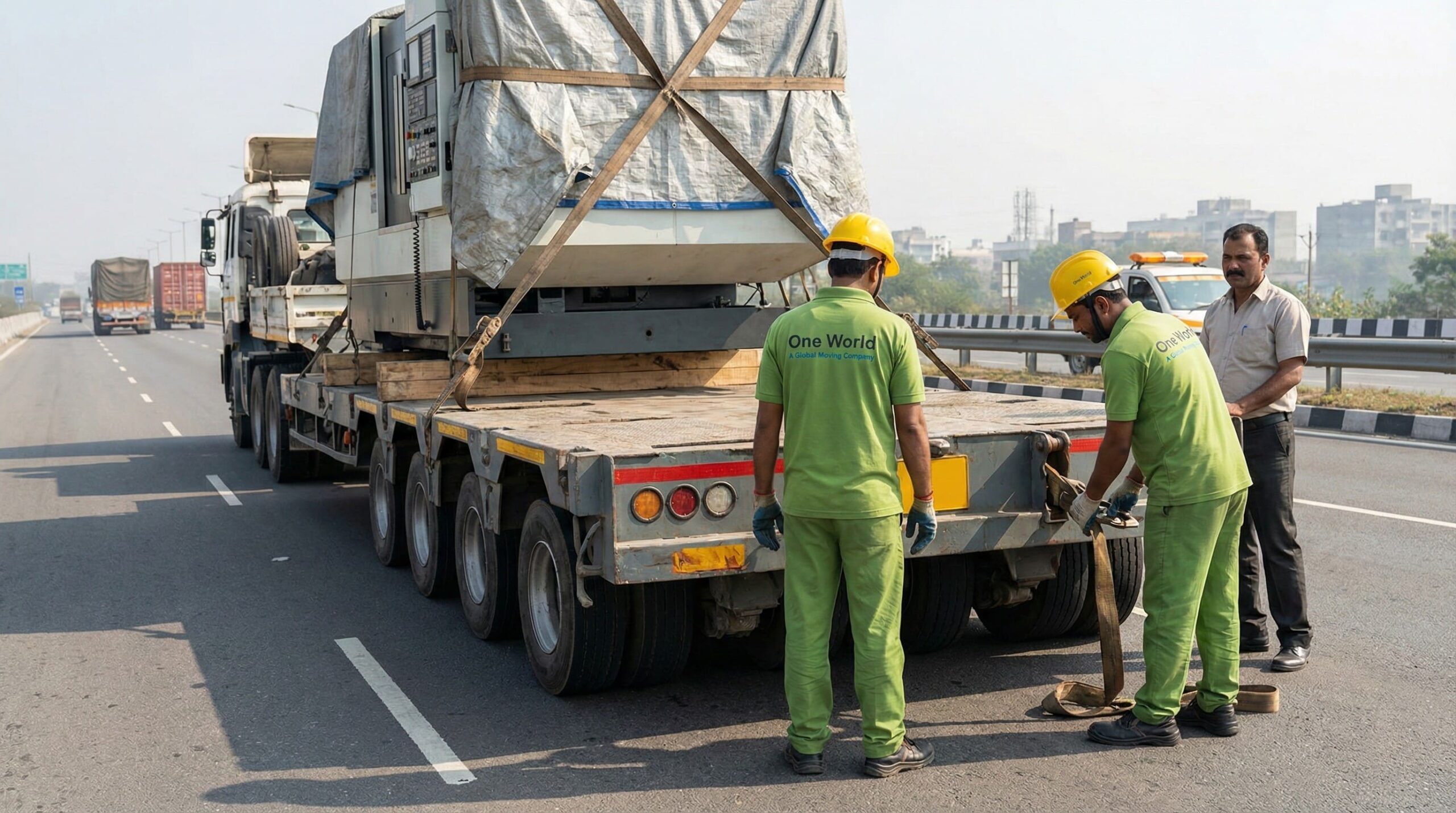
Relocating heavy industrial machinery is never just about “moving equipment.”
For most manufacturing companies in India, machinery relocation directly affects production timelines, client commitments, and operational continuity. A single miscalculation during dismantling or reinstallation can lead to extended downtime, equipment damage, or costly delays.
That’s why industrial machinery relocation in India requires far more than transportation. It demands engineering planning, controlled execution, and safety-first operations.
This article explains how enterprises approach machinery relocation professionally—and what separates structured execution from risky handling.
Why Industrial Machinery Relocation Is High-Risk
In a manufacturing environment, machines are not standalone assets. They are part of integrated production lines connected to utilities, foundations, and automation systems.
When relocating heavy industrial equipment, companies must consider:
- Machine weight and load distribution
- Foundation anchoring systems
- Electrical and PLC connections
- Hydraulic and pneumatic lines
- Production sequencing
Unlike general shifting, industrial relocation involves precision dismantling, secure lifting, controlled transportation, and accurate reinstallation.
In India’s competitive manufacturing sector, where production commitments are tight, downtime is often more expensive than the relocation itself.
Step 1: Site Study and Technical Planning
A successful industrial machinery relocation in India always begins with a proper site assessment.
Before any equipment is touched, experienced teams evaluate:
- Structural layout of the existing facility
- Entry and exit pathways for heavy machines
- Floor load capacity
- Dismantling sequence
- Installation readiness at the new site
This phase prevents surprises during execution. Without technical planning, relocation becomes reactive—and that increases both risk and cost.
Enterprises that invest in structured planning often complete relocation within controlled timelines.
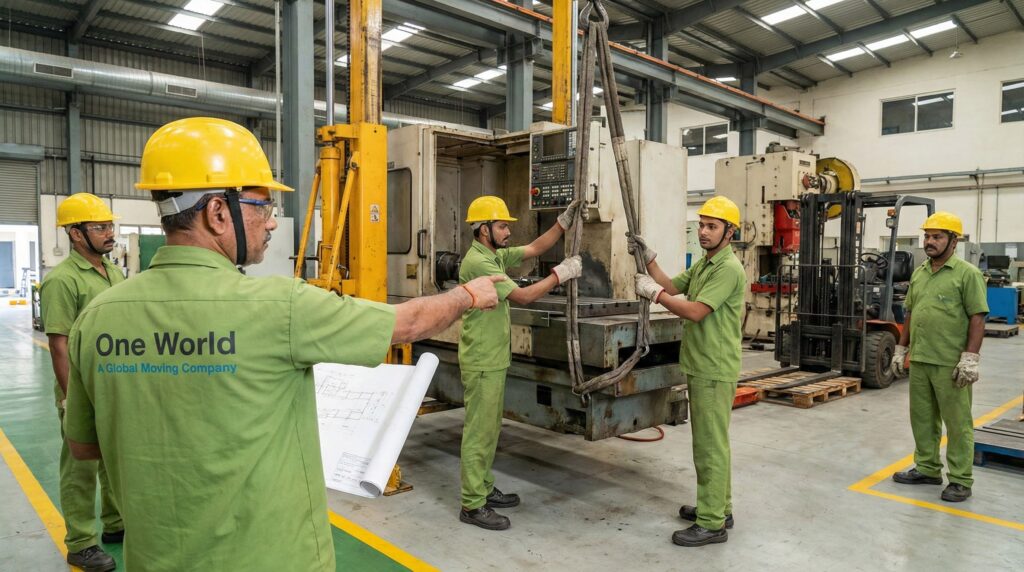
Step 2: Safe and Controlled Dismantling
Heavy machines are interconnected systems. Removing them requires technical understanding.
During dismantling:
- Electrical panels are carefully labeled
- Control systems are documented
- Components are tagged and secured
- Sensitive parts are protected
For brownfield projects—where relocation happens inside a running plant—shutdown windows are often limited. Teams must operate with coordination and speed, without compromising safety.
This is where experienced execution partners make a significant difference.
Step 3: Rigging and Lifting Operations
One of the most critical stages in industrial machinery relocation is heavy lifting.
Machines weighing several tons require:
- Hydraulic lifting systems
- Load-tested slings
- Skidding arrangements
- Certified rigging teams
Improper lifting techniques can cause structural damage to equipment or create serious safety hazards.
Professional rigging ensures:
- Controlled balance
- Asset stability
- Worker safety
- Compliance with industrial standards
In India, where plant layouts can vary widely, customized lifting strategies are often necessary.
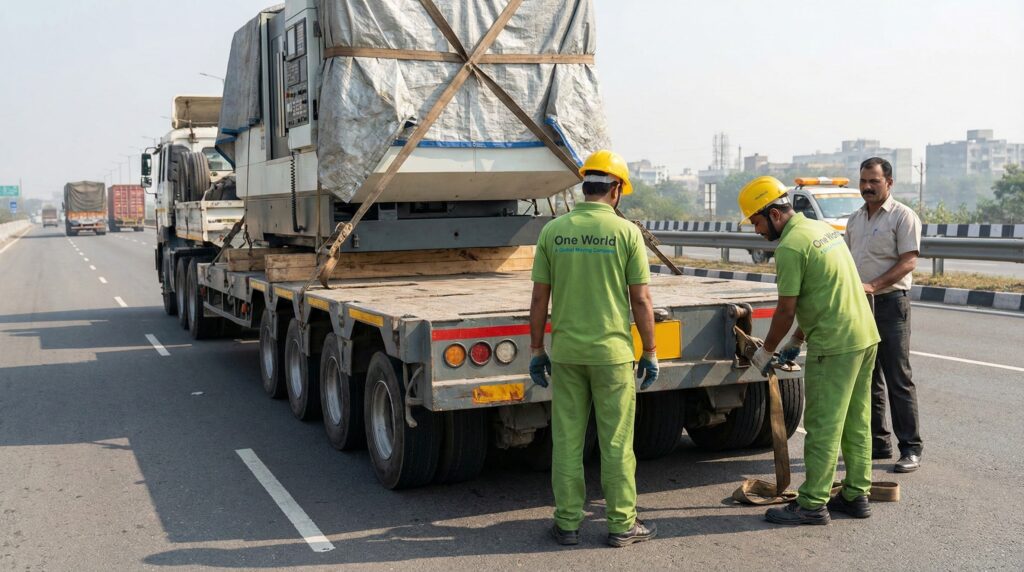
Step 4: Transportation and Transit Management
Relocating industrial machinery across cities or states in India introduces logistical challenges.
Route planning becomes essential, especially for oversized loads. This may involve:
- Height and bridge clearance checks
- Escort coordination
- Secured packaging
- Transit insurance
Sensitive equipment must be stabilized to avoid vibration damage during long-distance transport.
A well-planned transportation phase ensures machinery reaches the destination without calibration issues or structural stress.
Step 5: Precision Reinstallation and Alignment
The real test of industrial machinery relocation is not moving the machine—it’s reinstalling it correctly.
At the new location, teams focus on:
- Foundation alignment
- Level calibration
- Proper anchoring
- Electrical and PLC reconnection
- Utility integration
- Trial runs and performance testing
Even minor leveling errors can affect production accuracy or machine lifespan.
That is why precision matters during commissioning.
Greenfield vs Brownfield Machinery Relocation
Industrial machinery relocation in India typically falls into two categories.
Greenfield Projects
These involve setting up machinery at a new facility, often from bare land. Installation and commissioning are planned from the ground up.
Brownfield Projects
These involve relocating machinery within or between operational plants. These projects require tighter coordination because production schedules must be protected.
Brownfield relocations demand higher execution discipline due to time sensitivity.
Key Challenges in Industrial Machinery Relocation in India
Enterprises must manage multiple risks:
- Production downtime
- Equipment damage
- Safety incidents
- Regulatory compliance
- Alignment and calibration errors
Choosing a partner based solely on cost can increase long-term risk.
Industrial relocation is an engineering responsibility—not just a logistics activity.
Key Challenges in Industrial Machinery Relocation in India
Enterprises must manage multiple risks:
- Production downtime
- Equipment damage
- Safety incidents
- Regulatory compliance
- Alignment and calibration errors
Choosing a partner based solely on cost can increase long-term risk.
Industrial relocation is an engineering responsibility—not just a logistics activity.
What to Look for in a Relocation Partner
When evaluating industrial machinery relocation services in India, companies should consider:
- Engineering planning capability
- Heavy rigging expertise
- Structured execution process
- Safety compliance framework
- Experience across multiple industries
- End-to-end ownership model
A professional partner coordinates dismantling, lifting, transportation, and commissioning under one structured workflow.
That reduces dependency gaps and improves accountability.
Final Thoughts
Industrial machinery relocation in India is a strategic decision for any manufacturing organization.
Whether moving a single production line or relocating an entire plant, the focus must remain on:
- Safety
- Precision
- Planning
- Controlled execution
Companies that approach relocation with structured engineering processes are able to minimize downtime and protect high-value assets.
Relocation done right protects both productivity and reputation.
Planning an Industrial Machinery Relocation in India?
OneWorld Logix supports enterprises with structured, safety-driven machinery relocation services across India and international markets.
From technical assessment to final commissioning, we provide controlled execution designed to protect production continuity.
Connect with our team to discuss your relocation requirements.