
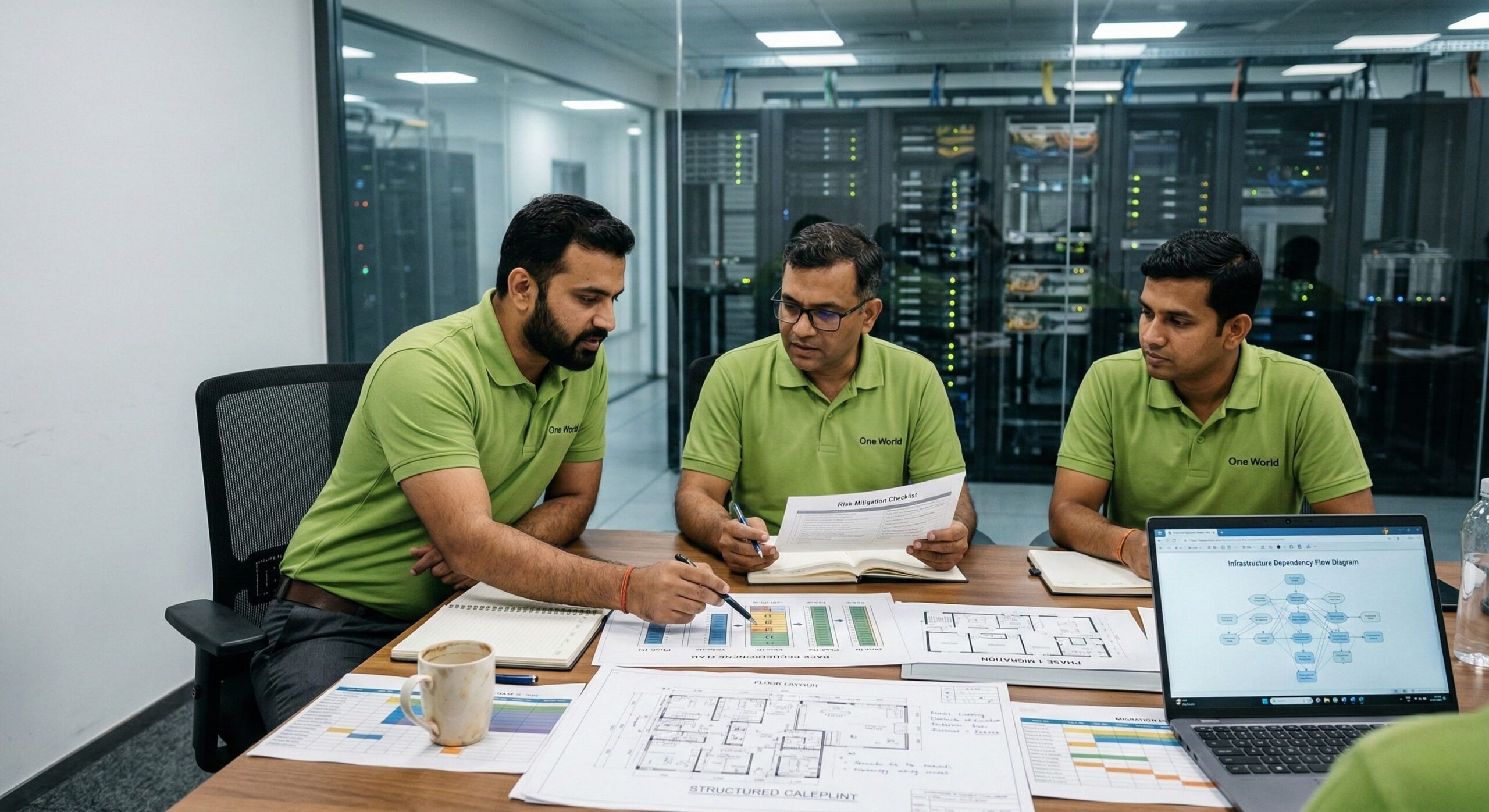
Data Center Migration India 2026 is no longer just about moving servers from Point A to Point B. India’s digital infrastructure is changing faster than most IT teams can keep up with—and whether you’re a mid-sized manufacturing company in Pune or a financial services firm in Mumbai, one question keeps coming up in every boardroom: should we migrate our data center?
This blog breaks it all down for you — no jargon, no fluff.
Table of Contents
- Why Indian Enterprises Are Rethinking Their Data Centers Right Now
- What AI Has Actually Changed About Data Center Migration
- The Biggest Mistakes Indian Companies Make Before Migrating
- Data Center Migration Checklist for 2026
- How to Choose the Right Migration Partner in India
- What One World Logix Does Differently
1. Why Indian Enterprises Are Rethinking Their Data Centers Right Now
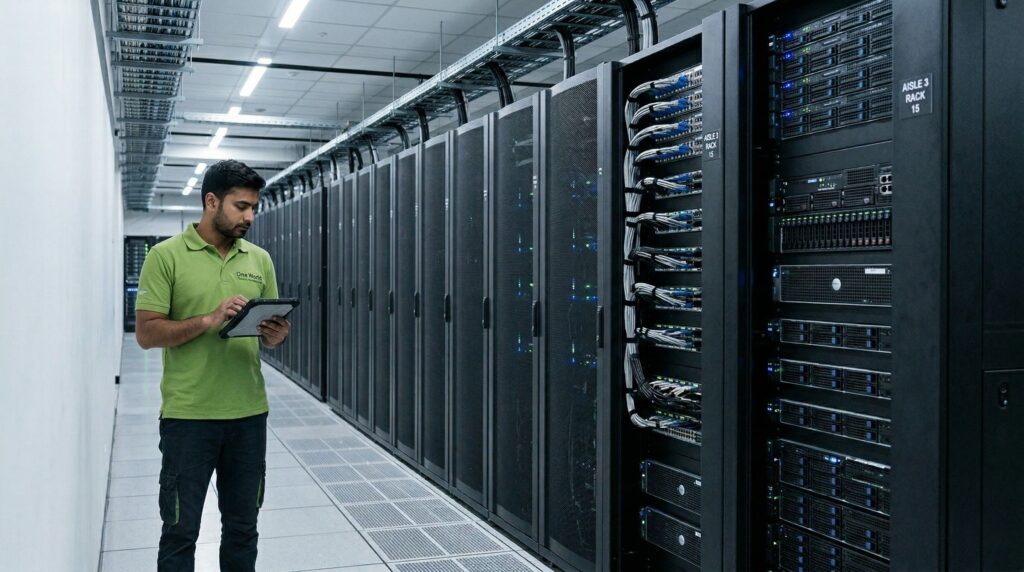
Let’s be honest. A lot of Indian companies are still running on legacy infrastructure that was built for a different era. On-premise servers from 2015, aging cooling systems, and IT teams stretched thin trying to maintain equipment that wasn’t designed for today’s workloads.
At the same time, the demand for compute power has exploded. AI tools, real-time analytics, remote workforces, and customer-facing applications all eat up significantly more resources than traditional enterprise software ever did.
Here’s what’s pushing Indian enterprises toward data center migration in 2026:
- Cloud costs are rising sharply—many companies are actually moving away from public cloud back to private or hybrid setups
- The Indian government’s data localization push means more businesses need domestic infrastructure
- Legacy hardware maintenance costs are eating into IT budgets without delivering performance gains
- AI workloads demand GPU-optimized environments that old data centers simply cannot support
According to a recent report by NASSCOM, India’s data center capacity is expected to double by 2027—and the businesses leading that growth are the ones migrating smart, not migrating fast.
2. What AI Has Actually Changed About Data Center Migration
This is where it gets interesting.
A few years ago, data center migration was mostly a physical and logistical challenge. Pack the servers, move them safely, reconnect everything, and pray nothing breaks. Today, AI has changed both the reason you migrate and the way you do it.
AI as a workload driver: Companies running machine learning models, generative AI tools, or even AI-powered customer service bots need infrastructure that traditional data centers weren’t built for. GPU racks, high-density cooling, low-latency networking — these are now requirements, not nice-to-haves.
AI as a migration tool: Forward-thinking migration partners now use AI-powered discovery tools to map your entire IT environment before a single cable is touched. These tools identify dependencies between applications, flag risks, and create a migration sequence that minimizes downtime. What used to take weeks of manual auditing can now be done in days.
Predictive risk analysis: AI can now predict failure points during a migration before they happen — analyzing historical data from similar migrations to flag what’s likely to go wrong and when.
The bottom line? If your migration partner isn’t using modern tools and methodologies, you’re taking on unnecessary risk.
3. The Biggest Mistakes Indian Companies Make Before Migrating
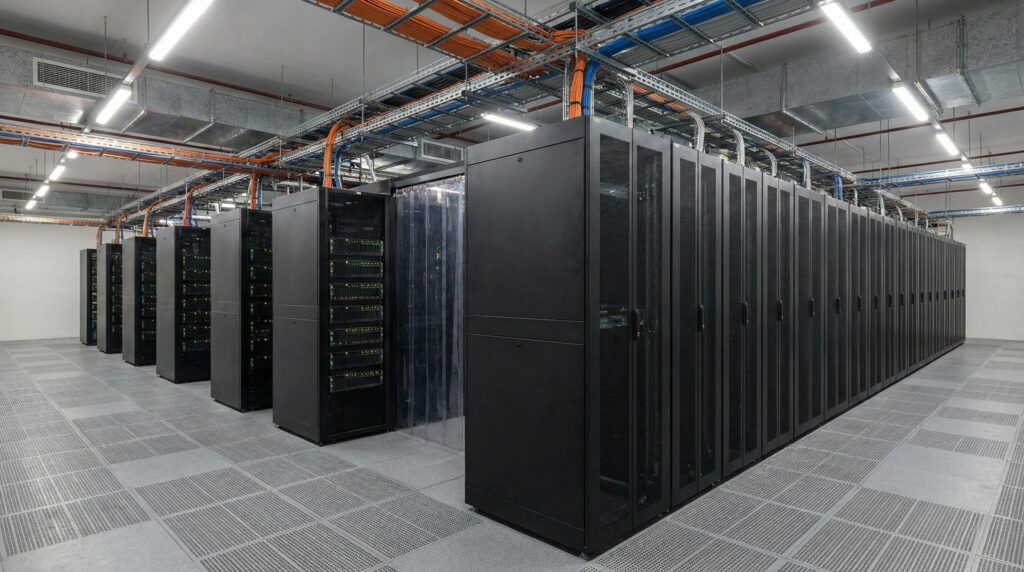
After handling data center migrations across India and 30+ countries, we’ve seen the same mistakes show up again and again. These aren’t small oversights — they’re the kind of errors that cause extended downtime, data loss, and budget overruns.
Skipping the discovery phase. Most companies underestimate how interconnected their systems are. Moving one application without understanding its dependencies is like pulling one thread and watching the whole sweater unravel.
Choosing the cheapest vendor. A data center migration isn’t the place to cut corners. The cost of even four hours of unplanned downtime almost always exceeds the savings from going with a lower-priced vendor.
No rollback plan. Things go wrong. Always. If your migration partner doesn’t have a documented rollback plan for every phase, that’s a serious red flag.
Migrating everything at once. The “big bang” approach—moving everything in one go—is high risk. A phased migration, starting with low-priority workloads, is almost always the smarter path.
Ignoring compliance. Especially for companies in BFSI, healthcare, and pharma—data handled during migration must comply with RBI guidelines, HIPAA equivalents, and DPDP Act requirements. This is non-negotiable in 2026.
4. Data Center Migration India 2026: Complete Pre-Move Checklist
Use this as your starting point before any migration conversation:
Phase 1 — Discovery & Assessment
- Complete inventory of all hardware, software, and network assets
- Dependency mapping across all applications
- Risk assessment report with severity scoring
- Define RTO (Recovery Time Objective) and RPO (Recovery Point Objective)
Phase 2 — Planning
- Choose migration strategy: Lift & Shift / Re-platform / Re-architect
- Finalize phased migration schedule
- Assign clear ownership for each task
- Prepare rollback procedures for every phase
- Confirm compliance requirements with legal/compliance team
Phase 3 — Execution
- Begin with non-critical workloads
- Monitor in real-time using infrastructure tools
- Document every action taken during migration
- Test applications after each phase before proceeding
Phase 4 — Post-Migration
- Performance benchmarking vs. pre-migration baseline
- Security audit of new environment
- Staff training on new infrastructure
- Decommission old equipment properly (data wiping, certified disposal)
5. How to Choose the Right Data Center Migration Partner in India
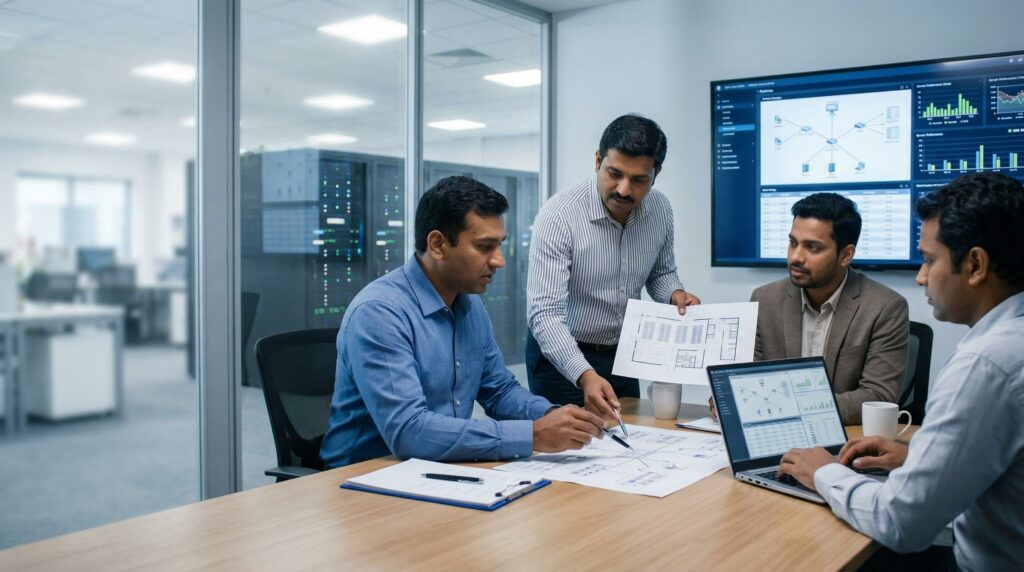
This decision matters more than most IT leaders realize. Here’s what to look for—and what to avoid.
Look for:
- Proven experience in physical IT relocation, not just cloud consulting
- End-to-end service — from planning and packing to reinstallation and testing
- Global capabilities if your business has international offices
- Certifications: IAM, ISO, MSME registration, GEM empanelment
- References from companies in your industry specifically
Avoid:
- Vendors who can’t show you a documented migration methodology
- Companies that outsource the physical handling to third parties they barely vet
- Anyone who can’t clearly explain what happens if something goes wrong mid-migration
The physical handling of IT equipment during migration is one of the most underrated risks. Improper packing, vibration during transport, and electrostatic discharge are real threats to expensive hardware. Your migration partner needs to understand both the IT side and the logistics side.
6. What One World Logix Does Differently
At One World Logix, data center migration isn’t a side service — it’s one of our core specializations. Based in Navi Mumbai with operations across India and 30+ countries, we’ve built our entire service model around one goal: zero-surprise migrations.
Here’s what that looks like in practice:
- We start every migration with a detailed site assessment and dependency mapping—before anything moves
- Our team handles the physical relocation with specialized packing methodology developed over 14+ years of experience
- We offer Global Field Engineer (FE) support, meaning if your migration involves multiple locations internationally, our team is on the ground wherever you need them
- Every migration includes a rollback plan, real-time monitoring, and post-migration support
- We’re certified with IAM, GEM (Government e-Marketplace), and MSME—giving enterprise and government clients the compliance documentation they need
Whether you’re moving from an aging on-premise setup to a modern colocation facility, shifting to a hybrid cloud model, or relocating your entire IT infrastructure to a new building, we’ve done it, and we’ve done it without disrupting business operations.
Final Thought
Data center migration in India in 2026 is not just an IT project. It’s a business-critical decision that touches every team, every customer, and every rupee of operational cost. The companies that get this right will move faster, spend less on infrastructure, and be ready for whatever AI throws at them next.
The companies that rush it — or pick the wrong partner — will spend the next 12 months recovering.
If you’re even thinking about a migration, the best time to start the conversation is before you’re under pressure to act. Reach out to the One World Logix team for a free consultation and site assessment.
📞 +91-882-882-0887 📧 info@oneworldlogix.com