
The Ultimate Industrial Machinery Installation Checklist
Installing heavy industrial machinery requires careful planning, engineering expertise, and strict safety procedures. Whether installing CNC machines or large production equipment, a structured installation process ensures safety, accuracy, and long-term machine performance.
A proper machinery installation checklist helps reduce downtime, prevent costly errors, and ensure machines operate according to manufacturer specifications.
Why a Machinery Installation Checklist is Important
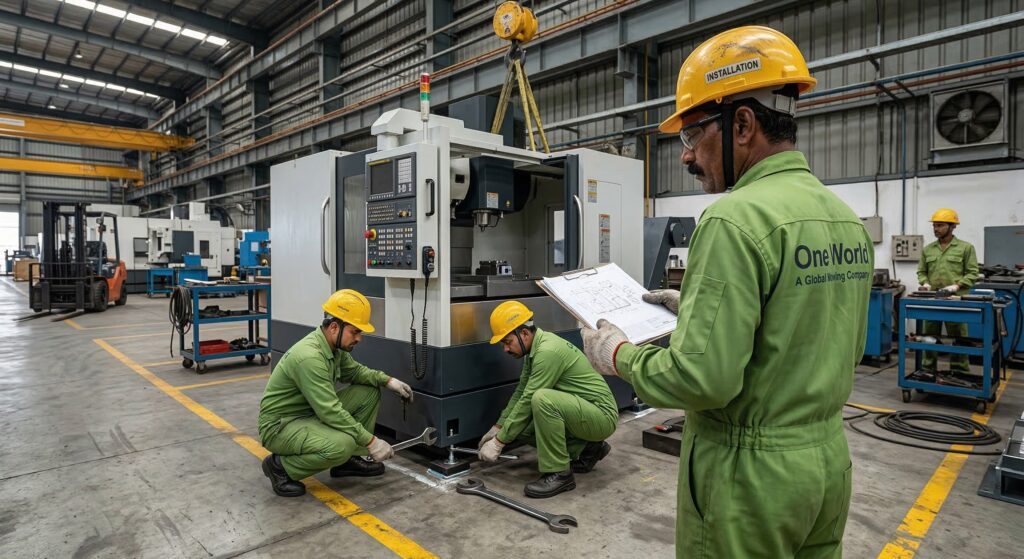
Industrial machines are heavy and complex and require precise installation. Without a structured approach, companies may experience problems such as the following:
- Machine vibration due to poor leveling
- Electrical connection issues
- Safety risks during installation
- Production downtime
- Expensive repairs or reinstallation
A well-planned checklist ensures every step is performed correctly.
Pre-Installation Machinery Checklist
Before installing any equipment, the installation team must prepare the site and review machine specifications.
Machine Documentation Review
Engineers should verify:
- Machine weight and dimensions
- Power requirements
- Installation guidelines
- Safety instructions
Understanding these requirements helps avoid installation errors.
Site Inspection
The installation location must be inspected carefully.
Important checks include:
- Floor load capacity
- Foundation condition
- Machine space clearance
- Access routes for forklifts or cranes
Large industrial machines often weigh several tons, so proper site preparation is critical.
Industrial Machine Installation Process
Once the preparation phase is complete, the installation process begins.
Machine Unloading and Positioning
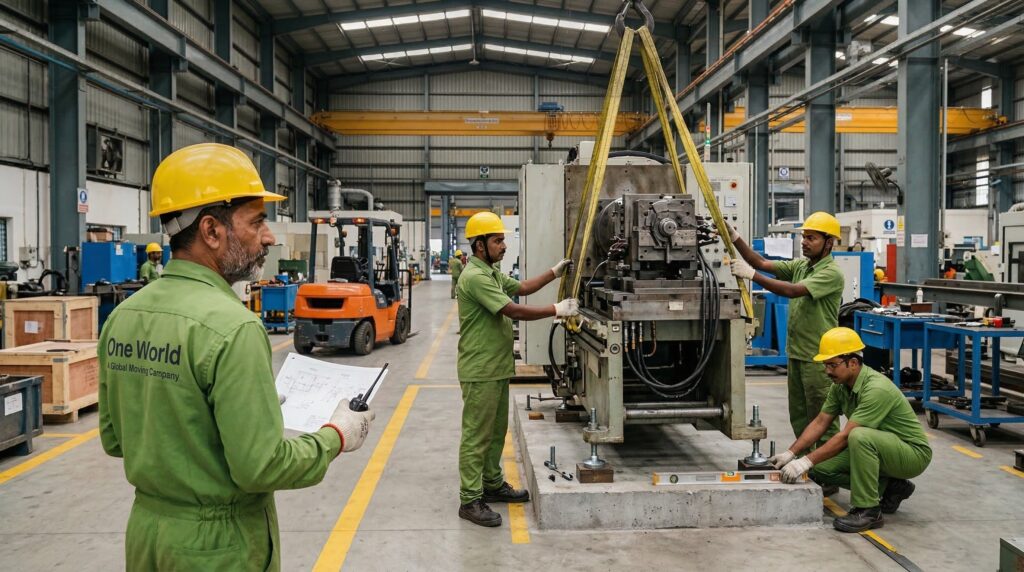
Heavy machines are unloaded using cranes or forklifts. Rigging specialists carefully position the equipment near the installation location while following strict safety procedures.
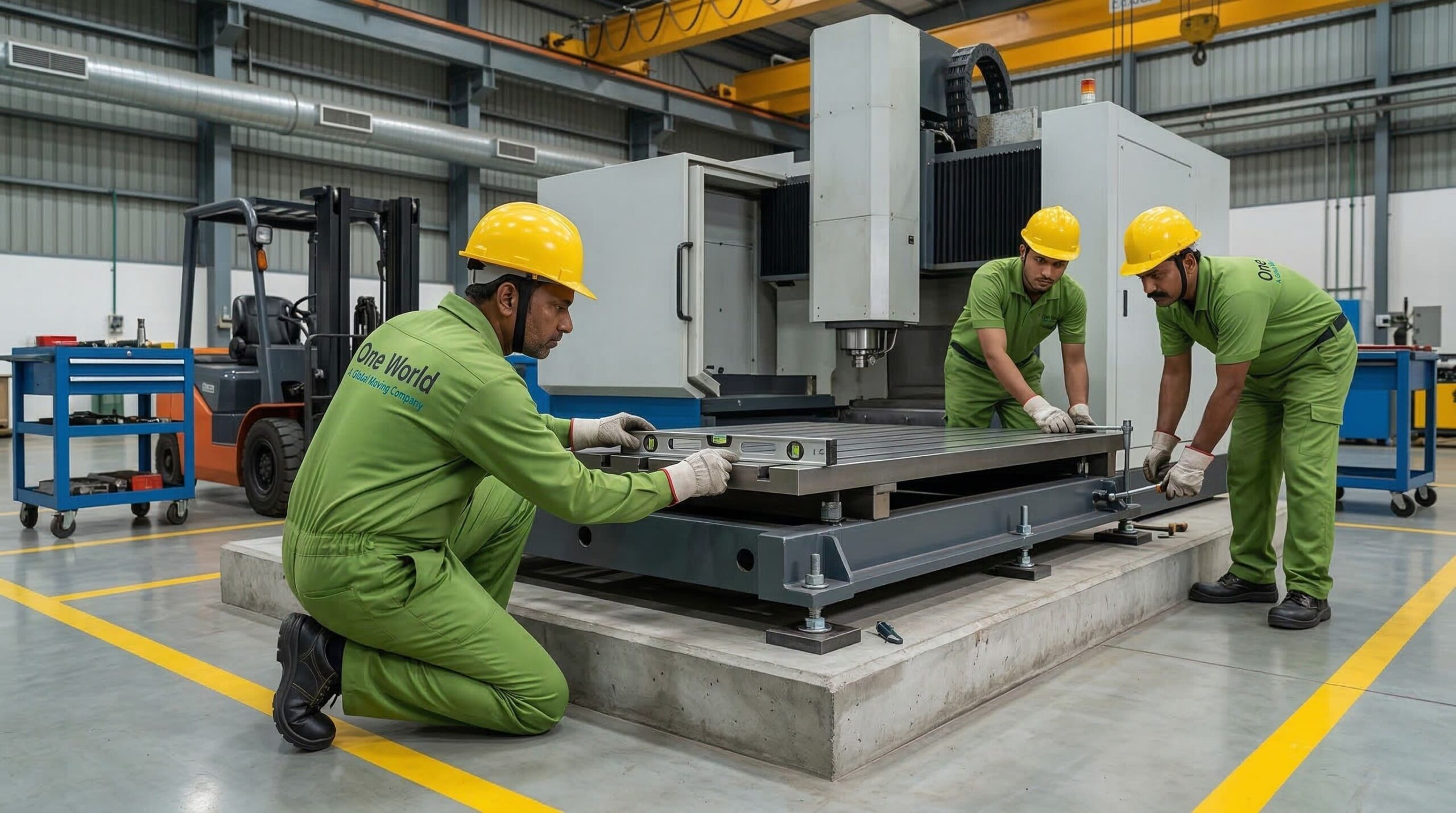
Machine Leveling and Alignment
Proper machine leveling ensures stable operation and precision performance. Engineers use precision tools such as spirit levels and laser alignment equipment to achieve accurate positioning.
Anchor Bolt Installation
Anchor bolts secure the machine to the foundation and prevent movement during operation. Installation engineers tighten the bolts according to specified torque requirements.
Electrical and Utility Connections
After positioning the machine, technicians connect electrical power, control systems, and other utilities such as compressed air or coolant systems.
Post-Installation Checklist
After installation, engineers must verify machine performance.
Machine Calibration
Calibration ensures the machine operates with proper accuracy and precision.
Trial Run and Testing
Engineers perform trial runs to check machine performance, vibration levels, and control system functionality.
Safety Inspection
Final safety checks confirm that all guards, emergency stops, and electrical protections are functioning correctly.
Common Machinery Installation Mistakes
Many installation issues occur due to improper planning.
Common mistakes include:
- Poor machine leveling
- Weak foundation preparation
- Incorrect electrical connections
- Skipping calibration procedures
Professional installation engineers help avoid these problems.
Why Professional Machinery Installation Services Matter
Industrial machinery installation requires specialized skills and equipment. Professional installation teams provide:
- Experienced engineers
- Proper rigging equipment
- Accurate machine alignment
- Faster installation with minimal downtime
Working with experts ensures machines are installed safely and efficiently.
Conclusion
Industrial machinery installation is a complex engineering process that requires precision, planning, and safety compliance. Following a structured machinery installation checklist helps businesses install equipment correctly and avoid costly operational issues.
FAQs
What is a machinery installation checklist?
A machinery installation checklist is a step-by-step guide used by engineers to ensure equipment is installed safely and correctly.
Why is machine leveling important?
Proper leveling improves machine accuracy and prevents vibration during operation.
How long does machinery installation take?
Installation time depends on machine size and complexity, ranging from a few hours to several days.
Companies must follow proper industrial safety regulations in India during machinery installation to ensure worker safety and compliance.
Installation processes should comply with Indian industrial safety standards to maintain operational quality and safety.
Industrial Machinery Installation Best Practices
To ensure successful machine installation, companies should follow proven industry best practices. Proper planning, use of certified lifting equipment, and experienced installation engineers play a crucial role in reducing risks and downtime.
Regular inspection of tools, adherence to safety protocols, and precise machine alignment further improve operational efficiency and long-term equipment performance.