
Introduction
Industrial plant relocation is one of the most complex operations a manufacturing company can undertake. Moving an entire production facility involves relocating heavy machinery, assembly lines, electrical systems, and other critical infrastructure.
Without proper planning, industrial plant relocation can cause production delays, equipment damage, and financial losses. Many companies underestimate the technical challenges involved in moving industrial equipment safely.
For this reason, companies rely on structured relocation strategies and experienced specialists who understand how to handle complex manufacturing systems.
Organizations such as OneWorld Logix specialize in managing these challenges by providing engineering-driven relocation solutions that reduce operational risks and downtime.
What Is Industrial Plant Relocation?
In this guide, we will explain the key steps involved in industrial plant relocation and how manufacturing companies can ensure a safe and efficient move.
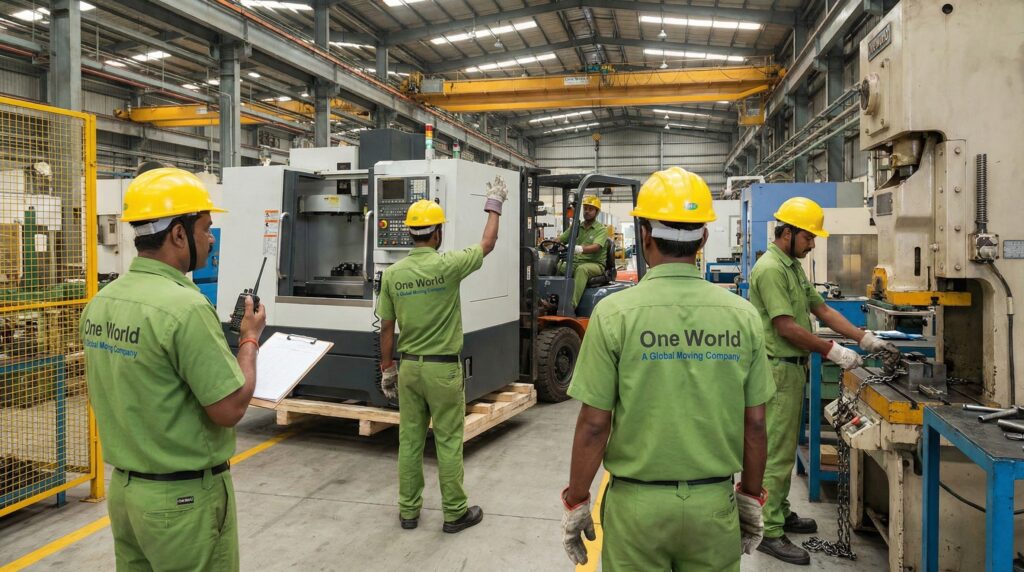
Industrial plant relocation refers to the process of moving a complete manufacturing facility or production unit from one location to another.
This process usually involves relocating.
- production machines
- manufacturing equipment
- assembly lines
- electrical systems
- industrial infrastructure
Because these systems are large, heavy, and often interconnected, industrial plant relocation requires specialized planning, lifting equipment, and experienced engineers.
Why Industrial Plant Relocation Can Be Challenging
Companies often face several challenges during industrial plant relocation.
Heavy Machinery Handling
Industrial machines can weigh several tons and require specialized lifting systems.
Production Downtime
Relocation often requires shutting down production lines temporarily.
Equipment Sensitivity
Many machines require precise alignment and calibration after installation.
Logistics Coordination
Transporting oversized equipment requires careful route planning and specialized trailers.
Because of these challenges, many manufacturing companies partner with professional relocation specialists such as OneWorld Logix, who manage the technical and logistical aspects of plant relocation.
7 Key Steps in Industrial Plant Relocation
A structured approach helps ensure successful industrial plant relocation.
- Site Assessment and Planning
The relocation process begins with evaluating the new facility.
Engineers analyze:
- floor space
- machinery layout
- electrical capacity
- loading areas
This helps determine how machines will be installed at the new location.
- Equipment Inventory
Before starting industrial plant relocation, companies must create a complete inventory of all machinery.
This includes:
- machine specifications
- weight and dimensions
- dismantling requirements
This step ensures no components are lost during relocation.
- Machinery Dismantling
Industrial machines often need to be dismantled before transportation.
Technicians carefully label and document each part to ensure correct reassembly later.
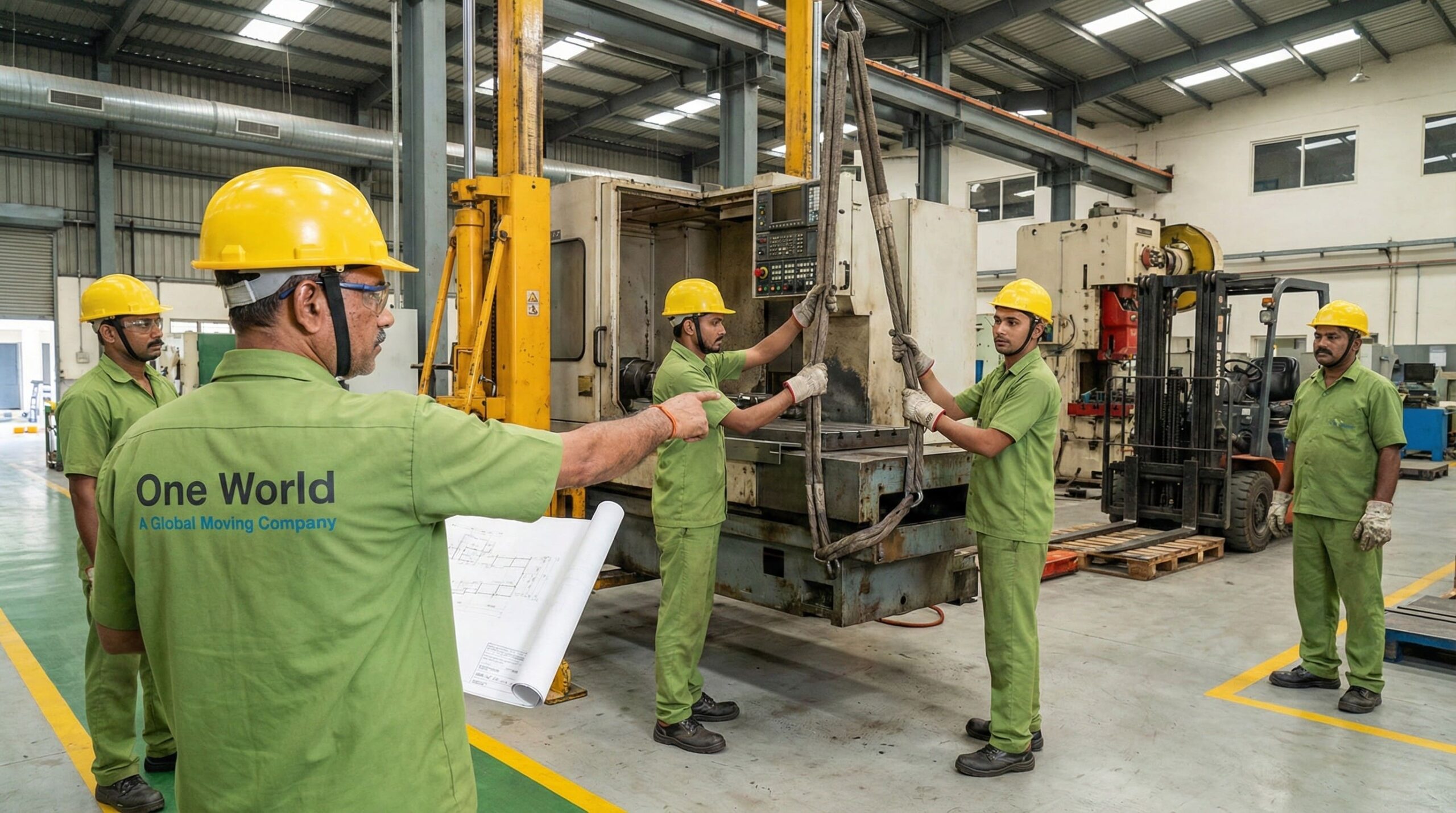
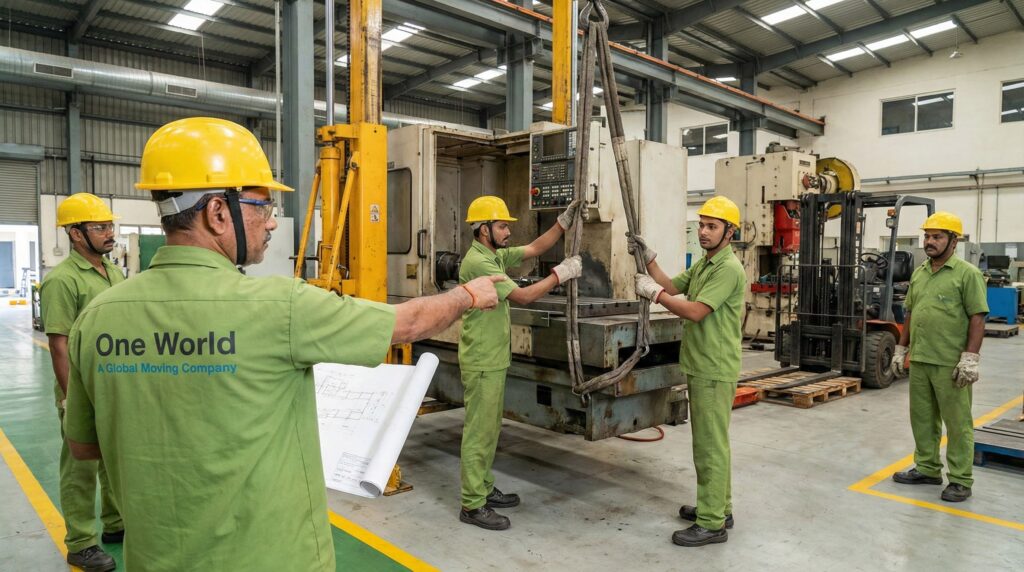
- Rigging and Lifting Operations
Heavy equipment is moved using specialized tools such as the following:
- cranes
- hydraulic gantries
- forklifts
- rigging systems
Professional relocation providers like OneWorld Logix use advanced lifting equipment to ensure safe machinery movement.
- Transportation and Logistics
Industrial machinery is transported using heavy-duty trailers designed for oversized loads.
Logistics planning includes:
- route selection
- transport permits
- safety measures during transit
- Machine Installation and Alignment
After reaching the new facility, machines are reinstalled and aligned.
Proper alignment is critical to maintain machine performance and product quality.
- Testing and Production Restart
Before restarting production, machines must be tested to ensure they function correctly.
Trial runs help identify potential issues before full-scale production resumes.
Best Practices for Successful Industrial Plant Relocation
Companies can reduce relocation risks by following these best practices.
- plan relocation activities in advance
- document equipment before dismantling
- hire experienced machinery relocation teams
- follow safety procedures during lifting and transport
- test machines before restarting production
Professional relocation providers such as OneWorld Logix help manufacturing companies follow these best practices to ensure smooth project execution.
How OneWorld Logix Supports Industrial Plant Relocation
Industrial plant relocation requires technical expertise, engineering planning, and specialized equipment.
OneWorld Logix provides relocation solutions designed specifically for manufacturing environments.
Their services include:
- machinery dismantling and installation
- heavy equipment rigging
- industrial machinery relocation
- factory and plant relocation planning
By combining engineering expertise with structured project management, OneWorld Logix helps companies relocate industrial facilities while minimizing operational disruption.
Conclusion
Industrial plant relocation is a complex process that requires careful planning and coordination. Moving production equipment without a structured approach can lead to downtime and operational risks.
By following a step-by-step relocation strategy and working with experienced specialists, companies can ensure a smooth transition to a new facility.
With proper planning and professional support, industrial plant relocation can be completed safely while maintaining production efficiency.
External Links (Do Follow)
Example:
- https://www.osha.gov (industrial safety standards)
- https://www.iso.org (quality and safety standards)