
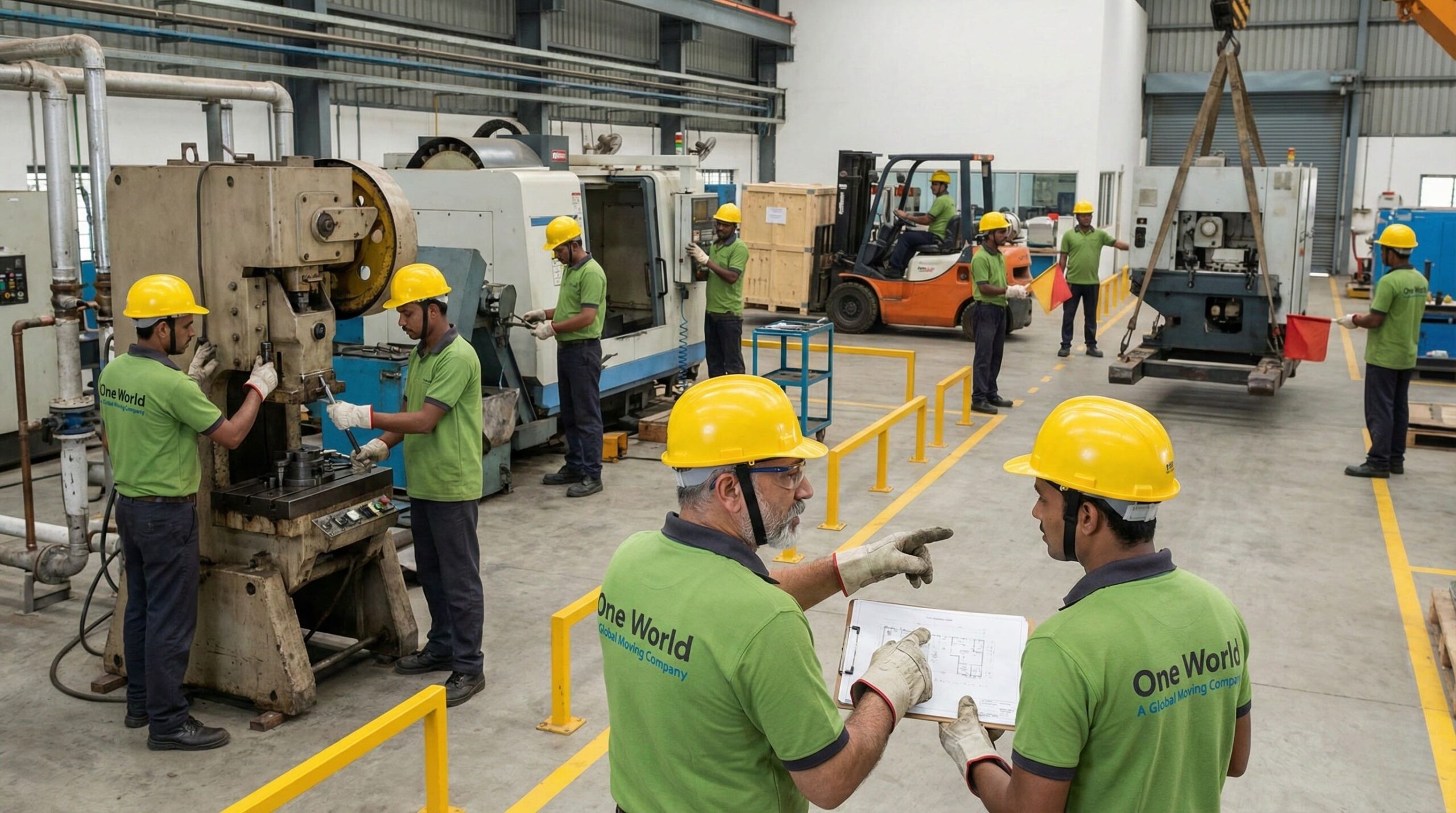
Industrial relocation can either disrupt an operation or strengthen it for years to come. With production shutdowns, safety exposure, and regulatory risk involved, relocating an industrial facility is not a routine logistics task. It is a high-risk execution project where planning discipline matters more than speed.
For plant heads, operations leaders, and infrastructure managers, even a small execution gap can lead to extended downtime, damaged equipment, or compliance issues. This article outlines the most common industrial relocation challenges and how organizations overcome them through structured planning and controlled execution.
Understanding Industrial Relocation Complexity
Industrial relocation goes far beyond dismantling and transport. A typical industrial plant relocation includes technical assessments, dismantling, heavy equipment handling, utility coordination, transportation, reinstallation, and controlled recommissioning.
Each phase must be executed precisely—especially in environments where equipment tolerances are tight, safety risks are high, and business continuity is non-negotiable.
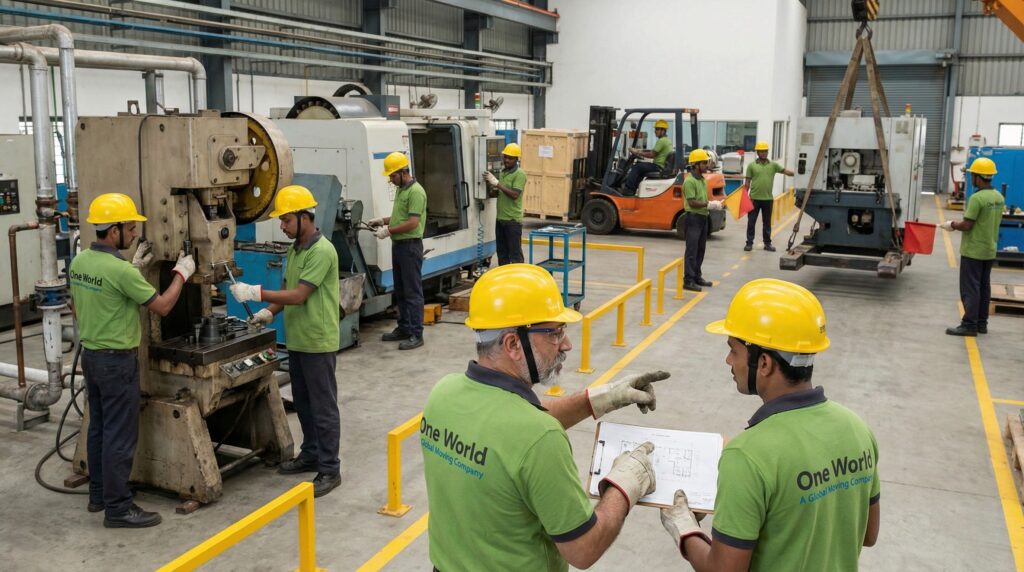
Challenge 1: Unplanned Downtime and Production Loss
Extended downtime is the costliest failure in any manufacturing facility relocation. It usually results from poor sequencing, missed dependencies, or unrealistic shutdown planning.
How to overcome it:
- Conduct detailed pre-move technical assessments
- Align phased relocation plans with production schedules
- Define realistic shutdown and restart windows
- Use approved method statements and dry runs
Downtime control is a planning discipline, not an execution shortcut.
Challenge 2: Equipment Damage During Movement
Industrial machinery is often custom-built and sensitive to vibration or misalignment. Damage during machinery relocation can result in expensive repairs or permanent accuracy loss.
How to overcome it:
- Use engineered dismantling and rigging plans
- Apply equipment-specific lifting calculations
- Ensure shock-protected packaging and alignment controls
- Maintain component traceability during reinstallation
Asset protection requires engineering oversight—not improvisation.
Challenge 3: Safety Risks During Industrial Relocation
Heavy loads, confined spaces, and parallel activities make industrial relocation inherently hazardous. A single incident can halt the project and expose organizations to liability.
How to overcome it:
- Perform formal risk assessments and JSA
- Implement site-specific safety and permit systems
- Deploy certified handling and rigging teams
- Maintain active on-site supervision
Safety must be embedded into execution, not treated as documentation.
Challenge 4: Poor Stakeholder Coordination
Industrial relocation projects involve multiple internal and external teams. Without clear ownership, delays and execution gaps are inevitable.
How to overcome it:
- Assign a single execution owner
- Define roles, responsibilities, and escalation paths
- Use centralized scheduling and daily coordination reviews
Clear accountability protects timelines and outcomes.
Challenge 5: Compliance and Regulatory Exposure
Industrial sites operate under strict safety and statutory regulations. Non-compliance during relocation can trigger audits or shutdowns.
How to overcome it:
- Identify regulatory requirements early
- Maintain documented lifting plans and permits
- Validate compliance before recommissioning
Compliance is foundational—not optional.
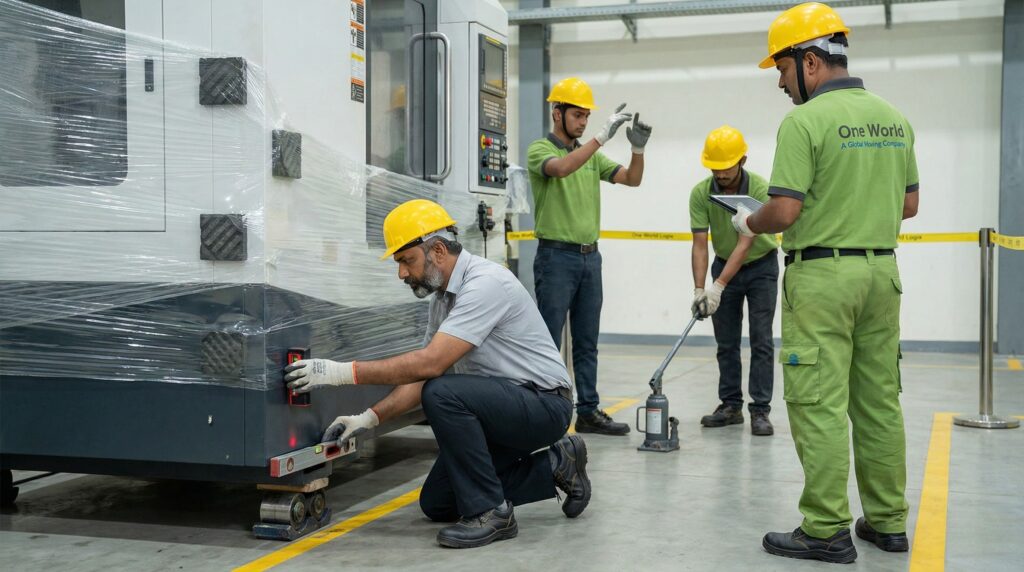
The Role of an Execution Partner in Industrial Relocation
Successful industrial relocation services require more than transport capability. They demand engineering rigor, risk control, and execution accountability.
OneWorld Logix operates as a mission-critical execution partner for enterprises where downtime, safety failures, and execution errors are unacceptable.
With 14+ years of experience and operations across 56+ countries, OneWorld Logix delivers structured industrial relocation, heavy machinery movement, data center and IT infrastructure relocation, and enterprise facility transitions. The company follows a risk-first execution model, built on technical assessments, safety compliance, and controlled on-ground execution.
OneWorld Logix works closely with plant heads, operations leaders, IT infrastructure managers, and facility teams across manufacturing, pharmaceuticals, automotive, BFSI, EPC, and enterprise sectors—supporting organizations that require reliability, transparency, and execution certainty in high-value environments.
Conclusion: Control Drives Relocation Success
Industrial relocation is not about moving fast—it is about moving right. Organizations that treat relocation as a structured execution project, supported by disciplined planning and experienced partners, protect business continuity while minimizing risk.