
How the Industry Is Preparing for the Next Wave of Growth for Data Center
Data centers are entering one of the most important phases in their evolution. By 2026, the scale, complexity, and criticality of digital infrastructure have increased dramatically. Cloud platforms, artificial intelligence, real-time analytics, and global digital services are placing new demands on facilities that were never designed for this level of performance. In this environment, data center migration has become a strategic decision rather than a routine operational task.
Organizations are moving infrastructure not only to change locations, but to prepare for future workloads, power requirements, and regulatory expectations.
Why Data Centers Are Changing So Rapidly
The primary driver behind today’s transformation is AI and hyperscale cloud growth. Modern AI workloads require dense computing environments, advanced GPUs, high-capacity networking, and powerful cooling systems. Many existing data centers struggle to support these requirements, especially those built for traditional enterprise IT.
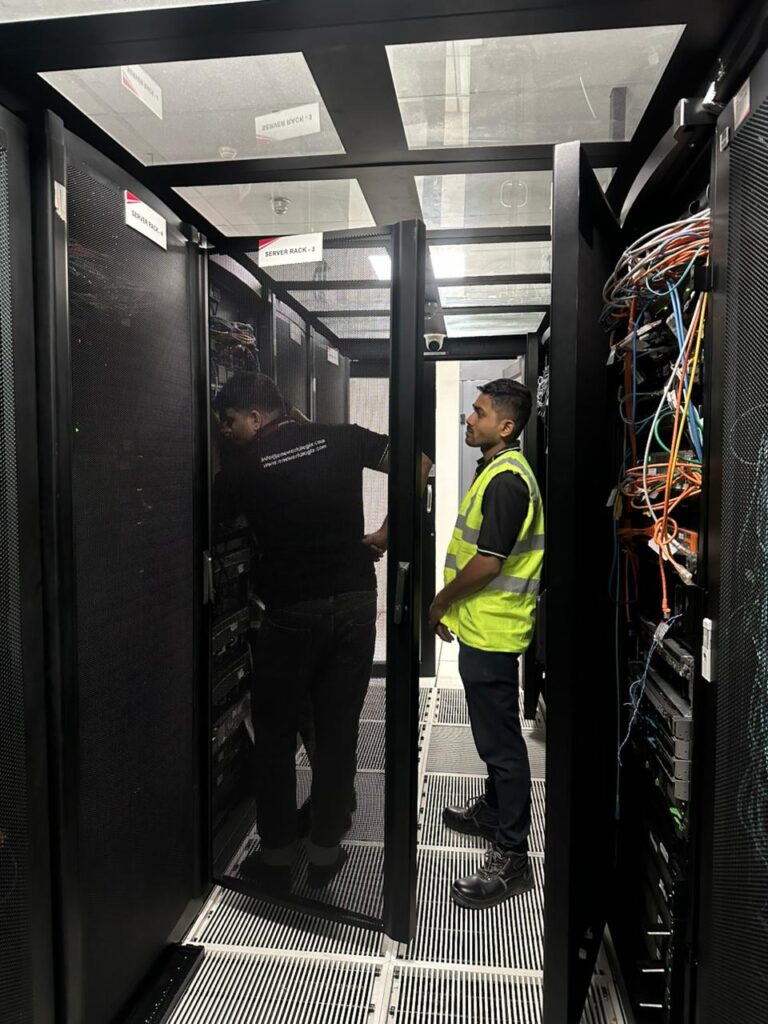
At the same time, hyperscale operators are expanding aggressively. Industry reports show that hundreds of new large-scale facilities are either under construction or planned globally, with total investments running into hundreds of billions of dollars. This growth highlights a simple reality: demand for data processing is rising faster than legacy infrastructure can support.
The Growing Importance of Data Center Migration
As infrastructure demands evolve, organizations are increasingly turning to data center migration to bridge the gap between existing facilities and future requirements.
Migration is no longer limited to shutdown-and-move projects. It now includes:
- Relocating equipment to power-rich or network-dense regions
- Consolidating multiple sites into fewer, more efficient facilities
- Moving from older buildings to AI-ready or hyperscale-compatible environments
- Transitioning workloads while maintaining uptime and service continuity
This shift reflects a broader industry trend: infrastructure must adapt continuously, not once every decade.
Power, Cooling, and Space: Key Migration Drivers
One of the biggest challenges shaping migration decisions in 2026 is power availability. High-density racks supporting AI workloads consume significantly more electricity than traditional systems. In many regions, grid capacity has become a limiting factor, forcing operators to relocate or redesign their facilities.
Cooling is another major concern. Air-based systems are often insufficient for modern hardware, leading to adoption of liquid cooling and advanced thermal management. Migrating to facilities designed with these systems in mind is often more practical than retrofitting older buildings.
Space constraints also play a role. Modern data centers require optimized layouts for cable management, airflow, and maintenance access—something many legacy sites cannot offer.
Migration in a World of Constraints
While demand is accelerating, the industry is also facing constraints that make migration more complex:
- Long equipment lead times for servers, networking gear, and AI hardware
- Regulatory and data sovereignty requirements influencing site selection
- Community and environmental considerations related to power and water usage
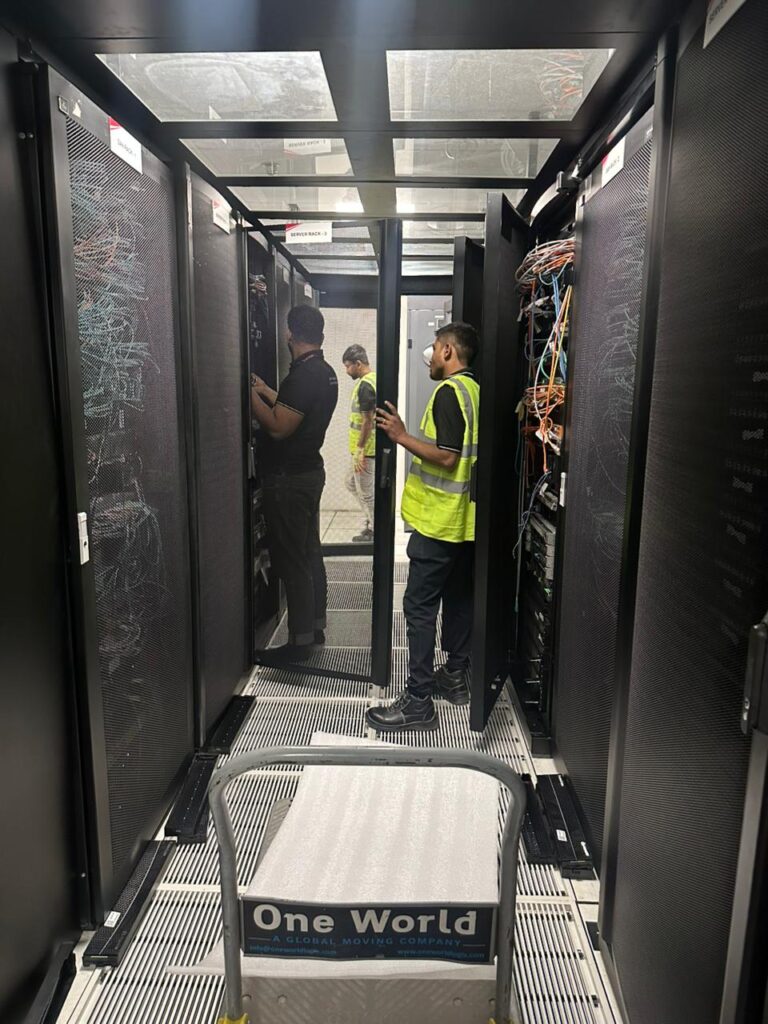
These factors make careful planning essential. Successful data center migration now depends on detailed asset mapping, dependency analysis, phased execution, and rigorous testing before and after relocation.
From Physical Move to Strategic Transformation
Modern data center migration is about more than logistics. It is closely tied to long-term infrastructure strategy. Organizations use migration projects as opportunities to:
- Redesign layouts for higher density and efficiency
- Improve resilience and redundancy
- Align infrastructure with sustainability goals
- Prepare environments for future AI and cloud expansion
This approach reduces risk and ensures that migrated systems are not only operational, but future-ready.
What 2026 Tells Us About the Road Ahead
Looking forward, data centers will continue to grow larger, denser, and more distributed. Edge facilities will expand closer to users, hyperscale campuses will increase in size, and AI-optimized infrastructure will become standard.
In this landscape, data center migration will remain a critical tool for adaptation. Organizations that treat migration as a strategic process—rather than a one-time event—will be better positioned to manage growth, control costs, and maintain service reliability.
Conclusion
By 2026, data center migration is no longer optional for many organizations. It is a response to rising data demand, AI-driven workloads, power constraints, and evolving regulatory landscapes. When planned and executed correctly, migration enables businesses to modernize infrastructure without disruption and stay aligned with the future of digital technology.
Understanding these trends is the first step toward making informed decisions—and building data center environments that are ready for what comes next.